

What if a visible crack is a sign of more than surface damage? In an Australian building, cracking, concrete deterioration or a change in how a structure is used can raise questions about safety and capacity. The right response isn’t determined by appearance alone. Structural reinforcement services should follow an assessment of the defect, the structure’s condition and the loads it needs to support.
It’s understandable to be unsure whether a problem needs repair, strengthening or both. Concrete repairs and crack injection address particular forms of damage, while structural strengthening aims to improve a structure’s capacity. The distinction matters: selecting a method before understanding the cause can lead to work that doesn’t address the underlying need.
This guide explains what reinforcement can address, how approaches such as carbon fibre strengthening differ, and what information helps shape a well-managed project. It also outlines how reinforcement can form part of a broader remedial scope. TRD Remedial works with builders, engineers and strata managers on existing-structure challenges, combining structural strengthening with technical concrete services where required.
Key Takeaways
- Cracking or deterioration doesn’t automatically mean strengthening is needed; the cause and the structure’s capacity help determine the right response.
- Structural reinforcement services should be matched to the building’s load path, condition and site constraints, rather than selected by method alone.
- Reinforcement, concrete repair and structural alteration address different needs, but may form part of one coordinated scope.
- A clear project pathway moves from defining the concern to investigation, scope development and remedial delivery, with roles shared across the project team.
- TRD Remedial brings structural strengthening, carbon fibre strengthening and concrete repairs together for existing-structure challenges.
What structural reinforcement services address in existing buildings
Structural reinforcement is work intended to improve or restore an existing building element’s capacity or performance. It may be considered when the structure needs to carry different loads, when deterioration or damage has affected its condition, or when planned alterations change how forces are transferred through the building. The right scope depends on the structure and the concern being addressed, not simply on the presence of a visible defect.
For example, a change in how a space is used may introduce different loading requirements. Removing or modifying a structural element may also affect the load path. In concrete buildings, reinforcement works with the surrounding concrete as part of the structural system. A general overview of reinforced concrete explains this relationship, but project decisions require consideration of the actual building and its condition.
Cracks, deflection or local concrete damage can be warning signs, but appearance alone can’t establish whether a defect is cosmetic or structural. Similar symptoms can have different causes, and the appropriate response depends on assessment. Assess the structure before selecting a reinforcement method: the observed defect is evidence to investigate, not a diagnosis or a repair specification.
What problems can structural reinforcement address?
Increased loading, altered use and changed capacity requirements can prompt investigation of an existing structure. Deterioration or damage may also affect performance, while a planned structural alteration can create a need to review how loads are supported and transferred.
When documenting a concern, note the affected element and where it sits in the building, describe what has changed, and gather any relevant drawings or records. This information helps frame the investigation, but it does not establish the cause. The location, pattern and condition of the affected element matter, as does the wider structural context. For more on identifying and understanding building defects, consult the structural defect repair guide.
When is reinforcement different from concrete repair?
Concrete repair addresses damaged material, for example where concrete has deteriorated or cracked. Reinforcement, by contrast, targets a structural performance requirement, such as capacity. These scopes can overlap: assessment may identify damage that needs repair as well as a requirement to strengthen the structure. Neither the defect nor the method should be inferred from surface appearance alone.
A repaired or patched surface does not, by itself, demonstrate that structural capacity has been restored or improved. Likewise, reinforcement may not resolve the cause of damaged concrete unless the repair need is also addressed. The scope should reflect the condition found and the project’s engineering requirements. TRD Remedial provides structural strengthening alongside concrete repairs, allowing related remedial work to be considered as part of the project scope.
How structural reinforcement methods support existing structures
Reinforcement isn’t a one-method solution. The system is selected to suit the building element, the loads it must carry and the way those loads travel through the structure. Design considerations may also include access, available space, the condition of the existing substrate and constraints around occupied areas or other work on site. These factors shape both the technical scope and how the work can be delivered.
Depending on the project, strengthening may involve carbon fibre, steel or another system. Each must be considered in relation to the structural requirement, not chosen simply because it is familiar or commonly used. Steel reinforcement is one part of the wider practice of reinforced concrete construction; the Concrete Reinforcing Steel Institute (CRSI) provides technical and educational resources on reinforcing steel. The appropriate approach for an existing building still depends on its assessed condition and design requirements.
The right reinforcement system is the one designed for the structure’s assessed demands, load path and site constraints, not a generic preference for a particular material. That principle keeps the proposed scope connected to what the building needs to achieve.
How does carbon fibre strengthening contribute?
Carbon fibre strengthening is one approach used to strengthen existing structural elements. Its suitability depends on the project design, the element being addressed and the performance requirement. It isn’t an automatic answer to every crack, load change or capacity concern, and no method should be selected from a symptom alone. The carbon fibre strengthening guide provides further context on this method and its use in structural reinforcement.
Why do load paths and substrate condition matter?
A load path is the route that forces take through a building, from the point where a load acts through supporting elements and into the foundations. Reinforcement needs to work with that route. Strengthening one element without considering how it connects to the rest of the structure may not address the overall requirement identified by the project design.
The existing concrete matters too. Its condition can affect the preparation required and whether concrete repairs need to form part of the remedial scope. Investigation may include reviewing available information and examining the affected area. Where work could intersect with embedded elements or services, slab scanning may help inform the project before intrusive work proceeds. The investigation required varies with the structure and proposed work.
TRD Remedial delivers structural reinforcement services, including carbon fibre strengthening, as part of its work on existing structures. Where assessment identifies related concrete repair needs, those works can be considered alongside strengthening. For project-specific remedial delivery, TRD Remedial’s structural strengthening supports a coordinated scope for existing-building challenges.
Structural reinforcement, concrete repair or alteration: identify the right scope
These scopes solve different problems, even when they apply to the same part of a building. Structural reinforcement targets a capacity or performance requirement. Concrete repair addresses damaged or deteriorated material. Structural alteration changes an existing structure to accommodate a planned modification. The visible defect, building type or intended works alone can’t determine the correct scope; assessment must establish the condition and project requirements.
| Scope | Objective | Typical trigger | Possible work |
|---|---|---|---|
| Structural reinforcement | Address a structural capacity or performance requirement. | Assessed need linked to loads, condition or proposed use. | A designed strengthening system, such as carbon fibre strengthening. |
| Concrete repair | Repair damaged or deteriorated concrete. | Concrete cracking, spalling or other identified material damage. | Repair work suited to the defect and the condition of the concrete. |
| Structural alteration | Modify an existing structure for a planned change. | A proposed opening, removal or modification of a structural element. | Controlled alteration work, with investigation or cutting where required. |
These categories aren’t mutually exclusive. An assessment may identify concrete damage and a separate capacity requirement, or a planned alteration may need strengthening as part of its scope. Structural reinforcement services should follow the project-specific requirements, not a default choice based on one symptom. A crack, for instance, doesn’t by itself establish whether the response is repair, reinforcement or both.
When is the primary need structural strengthening?
Strengthening is considered when the existing structure has a capacity or performance requirement that needs to be addressed. A proposed change in loads or use can prompt investigation, but neither automatically means reinforcement is necessary. Project-specific engineering input establishes the design requirements and informs the appropriate scope. This links the work to the assessed structure and its intended demands, rather than to a generic prescription.
When should repair or structural alteration be considered?
Concrete repair is directed at damaged or deteriorated concrete, with the work shaped by the condition identified. Structural alteration is different: it modifies an existing building to accommodate a planned change. Where the alteration involves concrete, slab scanning, cutting or drilling may support the work if the project scope requires it. Investigation and design requirements inform how these activities fit together.
Concrete deterioration can complicate the decision. The repair scope may need to address the affected material while the wider assessment considers whether structural performance is also a concern. A neat surface finish alone doesn’t demonstrate that capacity has been restored. The concrete remediation guide explores how concrete repair fits within broader remedial work.
For owners, strata managers and project teams, the practical starting point is to define the planned change or observed concern, then establish what assessment and design information is needed. The resulting scope may be repair, strengthening, alteration or a coordinated combination. Keeping those objectives distinct helps align remedial delivery with the actual condition and intended work.
What to expect from a structural reinforcement project
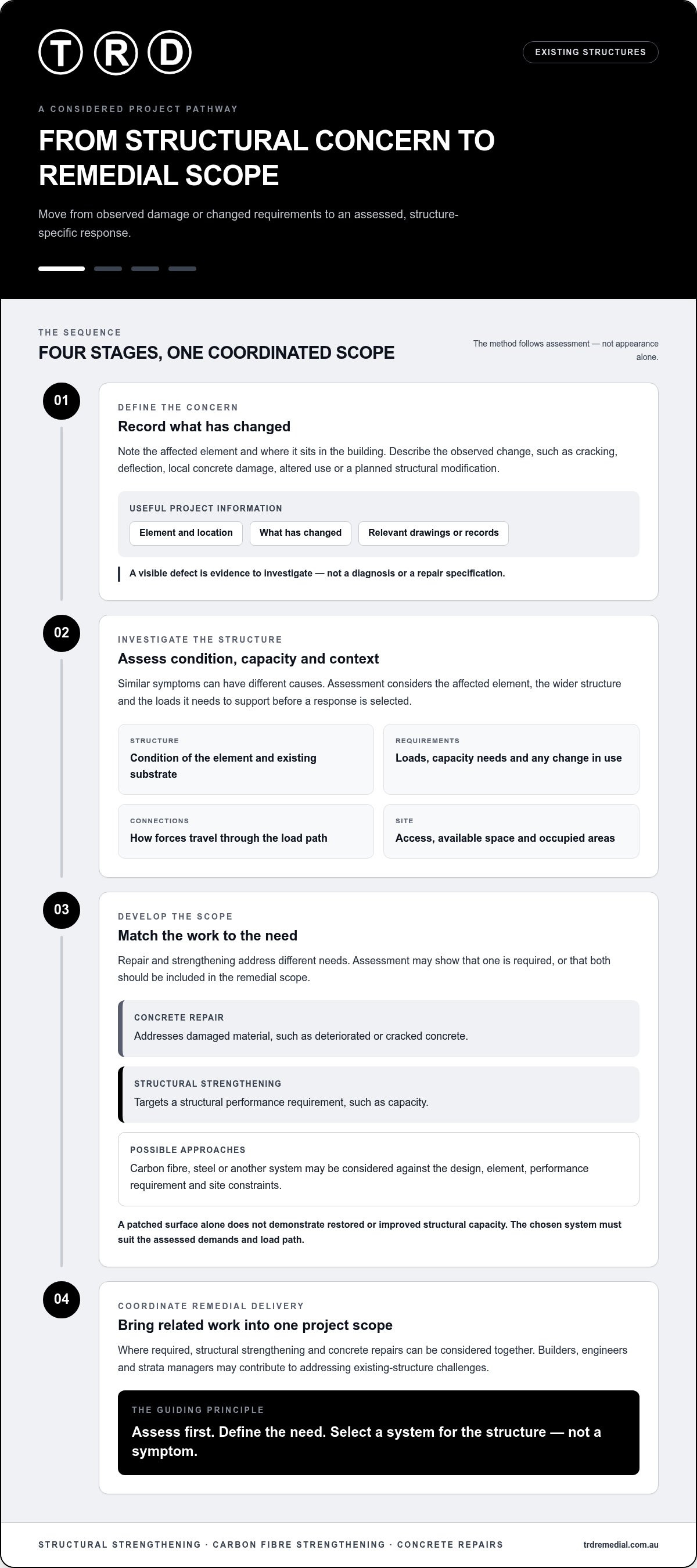
A well-managed project moves from a clearly described concern to investigation, scope development and remedial delivery. The sequence helps the team understand what is known, what needs further assessment and how the proposed work fits the building’s use. Structural reinforcement services should be planned around the findings and design requirements, not assumptions made from a brief description or a photograph.
- Define the concern. Record what has changed or been observed, such as a proposed alteration, known damage or a change in how an area will be used.
- Gather information and investigate. Review available records and assess the relevant structure. Further investigation depends on the building and proposed scope.
- Develop the scope. Findings and project-specific engineering input inform the work required, its sequence and any related remedial tasks.
- Coordinate delivery. The specialist contractor undertakes the agreed work in coordination with the wider project team and site conditions.
Investigation findings and design requirements guide the work scope, so each delivery decision can be tied to the actual structure and project.
What information helps scope reinforcement work?
Available structural drawings, records of previous alterations and relevant reports give the project team useful starting context. These documents can help clarify what is known about the building, but they don’t replace assessment of current site conditions.
Practical details matter too. Note access arrangements, occupied areas, operating hours or other constraints that could affect how work is planned. Include the intended use of the space and the concern that prompted the project. Investigation needs vary with the structure and proposed scope, so not every project requires the same information or level of investigation.
How are safety and coordination managed?
Responsibilities depend on the project. An owner or manager can provide relevant building information, help coordinate access and explain occupancy or operational needs. An engineer may establish design requirements and advise on the structural scope. A builder can coordinate the work with other activities on site, while the specialist contractor carries out the remedial work defined for its scope.
Clear communication between these parties helps surface constraints before work begins. If concrete cutting, drilling or demolition forms part of the project, those activities need controlled planning that accounts for the agreed scope and site conditions. Slab scanning may also be relevant where investigation is needed before intrusive work. The project team should keep safety, quality and applicable compliance requirements central to planning and delivery, without treating coordination as a substitute for design or assessment.
For owners, builders and managers organising remedial work, early coordination can help align access, investigation and delivery. Discuss structural reinforcement work with TRD Remedial as part of a considered project scope.
Structural reinforcement services from TRD Remedial
TRD Remedial is a specialist contractor delivering structural remediation and concrete repair projects for residential, commercial and industrial buildings across Australia. Its structural reinforcement services address existing-structure challenges, with work scoped to the project’s requirements and coordinated with broader remedial works where needed.
Structural strengthening can sit alongside carbon fibre strengthening or concrete repairs within a wider project scope. For example, where a project involves both a structural performance requirement and concrete deterioration, the relevant work can be considered together rather than treated as unrelated tasks. The appropriate scope depends on assessment and project-specific requirements.
Technical services can also support remedial planning and delivery. Slab scanning may help inform work where the proposed scope involves intrusive activity, while core drilling can form part of works where openings are required. These services are selected in response to site conditions and project needs, not included by default.
How TRD Remedial supports complex remedial scopes
Existing-building work often requires coordination across several parties. TRD Remedial works with builders, engineers and strata managers, aligning its specialist contracting role with the wider project team. Clear information about the observed concern, intended changes and site constraints helps the team understand how remedial activities fit together.
Depending on the findings and project requirements, structural strengthening may form part of a scope that also includes defect remediation or structural alterations. Concrete repairs, crack injection, slab scanning and core drilling are among the technical services that may be relevant to a broader remedial project. The scope is specific to the work identified; no single service is appropriate for every building or condition.
For strata managers and owners, this joined-up view can help frame the work around the building issue and the planned project, rather than treating each activity in isolation. Builders and engineers can coordinate their respective project roles with the specialist contractor so that the remedial work aligns with the project information and agreed scope.
What is the next step for your project?
Start with a concise description of the structure, the concern observed and any intended change in use or configuration. Include available drawings, reports or alteration history, along with practical details such as access and occupancy constraints. This gives the project discussion useful context and helps identify which aspects of the remedial scope are relevant.
TRD Remedial delivers structural strengthening, carbon fibre strengthening, concrete repairs and related technical services. Discuss the existing-building challenge and how the required remedial work fits the project.
Discuss your structural reinforcement project with TRD Remedial and outline the structure, concern and intended change.
Make the next structural decision with confidence
A concern about an existing building can feel difficult to act on when the cause and the right scope aren’t yet clear. A practical next step is to bring together what you know: the affected structure, the issue observed, any relevant drawings or reports, and changes being considered. This gives the project discussion a clear starting point and helps focus attention on the information needed to plan the work.
Structural reinforcement services are most useful when they respond to the building’s assessed requirements. TRD Remedial brings specialist structural remediation and concrete repair contracting to existing-structure projects, working with builders, engineers and strata managers. Its capabilities include structural strengthening and carbon fibre strengthening, alongside related remedial work where the project calls for it.
Outline the concern and intended change, and the project scope can be discussed in context. Share your building’s reinforcement requirements with TRD Remedial and take a considered next step towards addressing the issue.
Frequently Asked Questions
What are structural reinforcement services?
Structural reinforcement services are remedial works that strengthen or restore the performance of existing building elements. They can address a defined requirement in a beam, slab, column or wall without making the entire building the subject of the work. The scope depends on the element and its role in the structure. Reinforcement is distinct from routine maintenance or a cosmetic finish, which may improve appearance without addressing structural performance.
When does an existing building need structural reinforcement?
An existing building may need reinforcement if assessment identifies a capacity or performance concern. A proposed change, such as installing heavier equipment or changing the use of a floor, may prompt a review of the relevant structural elements. Damage or deterioration can also lead to investigation. None of these circumstances automatically means strengthening is required; an appropriate assessment helps establish whether the concern relates to capacity and what response is suitable.
Can structural reinforcement be carried out without replacing the structure?
Yes. Reinforcement is work to an existing structure, so a project may strengthen selected elements while retaining the wider building. The extent of intervention depends on the condition of the affected area and the requirements identified for the project. In some cases, assessment may identify damaged material that needs repair as part of the work. Whether an element can remain in place is a project-specific decision, not something that can be determined from appearance alone.
How is the appropriate reinforcement method determined?
The method is determined from the structural requirement and the conditions at the building, not from a general preference for one material. Relevant considerations can include the element’s function, how loads transfer through it, the substrate condition, access for the work and any site constraints. Project-specific engineering input establishes design requirements. The proposed scope can then be coordinated with relevant remedial work and practical delivery needs.
Is carbon fibre suitable for every structural strengthening project?
No. Carbon fibre is one strengthening approach, but it isn’t a universal solution. Its suitability depends on the project design, the element being strengthened and the condition and geometry of the existing structure. Access and site constraints may also be relevant. Other systems may be considered where the requirements call for them. The design process determines whether carbon fibre aligns with the assessed need; the material shouldn’t be selected from a crack or defect alone.
What information should I prepare before discussing structural reinforcement work?
Gather any available structural drawings, previous alteration records, inspection reports and information about the building’s current use. A clear description of what prompted the discussion, including where the concern is and when it was observed, can help establish context. Note any proposed change and practical conditions such as access or occupancy. You don’t need to interpret technical documents yourself; sharing what’s available helps frame the project conversation.
Can structural reinforcement be combined with concrete repairs or alterations?
Yes. A single project can combine these scopes if the investigation and design requirements identify related needs. For example, a planned opening may involve structural alteration, while nearby concrete damage could require repair and a separate capacity requirement may call for strengthening. Technical work such as slab scanning or core drilling may also support an alteration where relevant. The combined scope should account for how the activities interact and be planned for the specific structure.


