
Demolishing a structurally deficient asset is often a failure of engineering imagination rather than a financial necessity. With building construction output prices rising by 4.9% in the year to June 2026, the cost of starting from scratch has never been more prohibitive. You're likely facing the pressure of NCC 2026 compliance or the urgent need to support heavier plant equipment without tearing down the existing slab. It's a high-stakes environment where safety isn't negotiable, but neither is your project timeline.
This guide explores the most effective engineered structural strengthening solutions to restore load-bearing capacity and extend the operational life of your building. We'll look at how advanced materials like carbon fibre and precision concrete repairs offer a compliant, low-impact alternative to traditional heavy steel. You'll discover how to navigate technical defects and code updates while maintaining the architectural integrity of your asset. By the end of this article, you'll understand the methodical steps required to stabilise and reinforce your structure for the long term.
Key Takeaways
- Learn how engineered structural strengthening solutions offer a high-performance alternative to demolition while addressing critical load-bearing deficits.
- Discover why carbon fibre is now the preferred material for reinforcing concrete due to its exceptional tensile strength and minimal architectural footprint.
- Understand the importance of technical diagnosis, such as slab scanning, to ensure precision and safety before any structural alterations begin.
- Identify the key factors that determine the success of remedial work, from rigorous surface preparation to selecting the right engineered system.
- Gain insights into navigating the Australian regulatory landscape, ensuring your project meets the latest compliance standards for long-term asset viability.
Understanding Structural Strengthening: When and Why it is Required
Structural strengthening is the engineered process of enhancing a building's load-bearing capacity or restoring its original design strength. It moves beyond basic maintenance. For Australian asset managers, these interventions are critical for extending the operational lifecycle of aging infrastructure. By applying targeted structural strengthening solutions, we can avoid the massive capital expenditure and environmental impact associated with demolition and reconstruction. These methods are designed to stabilise a structure while ensuring it remains fit for its intended purpose.
The success of these systems depends on a deep understanding of reinforced concrete principles, where the synergy between the concrete matrix and internal reinforcement must be maintained. When this balance fails due to age, environmental stress, or increased demand, the structure requires immediate, methodical correction to prevent catastrophic failure.
Identifying Structural Deficits in Existing Assets
Visible distress often signals deeper systemic issues. Excessive deflection in floor slabs or beams suggests the original reinforcement is no longer adequate for the current load. Cracking and spalling are equally concerning indicators. These aren't just aesthetic flaws. They're often the result of carbonation or chloride ingress, which corrodes internal steel. Environmental factors, particularly in coastal Australian regions, accelerate this degradation. Salt-laden air and high humidity lead to concrete cancer, making the integration of crack injection and structural reinforcement vital. High-performance remediation often requires a two-stage approach. First, we use crack injection to seal the substrate against further moisture ingress. Then, we apply reinforcement to restore integrity. This integrated method ensures the repair doesn't just mask the problem but solves the underlying deficit.
Drivers for Structural Reinforcement in Modern Buildings
The demand for strengthening is often driven by functional evolution. Modern commercial spaces frequently require upgrades to support high-density storage or heavy HVAC plant equipment that the original designers didn't anticipate. Structural alterations, such as cutting new openings for lifts or stairs, also necessitate local reinforcement to redistribute loads safely. Correcting original construction errors or design oversights also falls under this scope.
Compliance is another major factor for Australian assets. With the adoption of NCC 2026, older assets must often be retrofitted to meet updated safety and seismic standards. Implementing engineered structural strengthening solutions allows these assets to remain functional while meeting the rigorous demands of modern building codes. In these scenarios, the objective is a compliant, high-strength outcome that minimises downtime and preserves the building's footprint.
Advanced Strengthening Technologies: Carbon Fibre and Engineered Systems
Modern engineering has shifted away from the brute force of traditional heavy-duty steel. While steel was once the primary choice for reinforcement, high-tensile composite materials now offer a more sophisticated approach. These advanced structural strengthening solutions allow for precise reinforcement without adding significant dead weight to the asset. This evolution is driven by the need for higher performance in space-constrained environments where traditional methods are often impractical.
The success of these engineered systems depends on how they address specific structural needs, including shear, flexural, and axial capacity. A critical component of this process is the selection of specialised bonding agents and resins. The epoxy must facilitate a perfect load transfer between the concrete substrate and the reinforcement material. Without technical precision during the bonding phase, the structural integrity of the entire system is compromised. All applications must strictly align with the National Construction Code to ensure they meet Australian safety standards.
Carbon Fibre Reinforced Polymer (CFRP) Systems
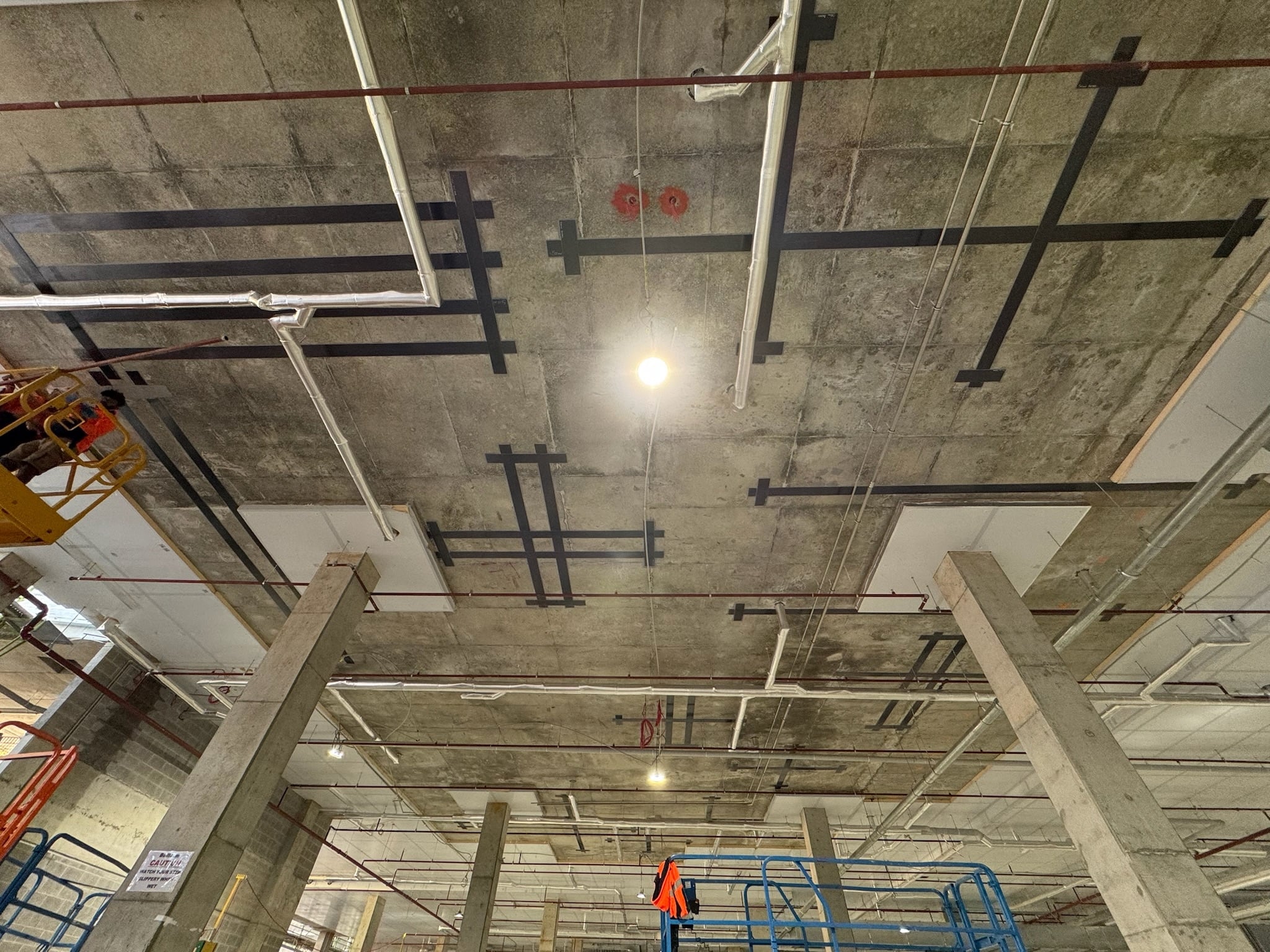
CFRP is the preferred choice for modern structural alterations due to its exceptional strength-to-weight ratio. It's roughly ten times stronger than steel but a fraction of the weight. Engineers generally utilise two formats: pultruded CFRP plates (laminates) and flexible fabric wraps. Plates are typically applied to the tension face of beams and slabs to increase flexural capacity. In contrast, flexible wraps are used for column confinement or shear reinforcement, where the material must wrap around the structural member. These systems are non-corrosive, which is a vital advantage for assets exposed to Australia's harsh coastal conditions.
Traditional Methods: Steel Plate Bonding and Section Enlargement
Traditional steel plate bonding remains a viable solution for scenarios where extreme stiffness is the primary requirement. However, the process is labour-intensive. It requires heavy lifting equipment, mechanical anchoring, and pressure grouting. These factors often increase project timelines and costs. Concrete section enlargement is another established method. It involves adding new reinforcement and a fresh layer of concrete to increase the cross-sectional area of a column or beam. While this increases load-bearing capacity, it significantly reduces usable floor space and increases the overall dead load of the building. For many asset managers, a more streamlined approach using carbon fibre strengthening provides a more efficient result without the architectural bulk of traditional steel or concrete additions.
Comparing Strengthening Methods: Efficiency vs. Capacity
Selecting the right reinforcement requires a precise evaluation of performance, cost, and project speed. While raw material costs for steel are typically lower than carbon fibre, the total project expenditure often favours composite systems. This is due to the heavy labour requirements associated with traditional methods. Installing steel plates involves mechanical anchoring, specialised lifting equipment, and extensive on-site welding or bolting. These factors increase site disruption and extend the project timeline, which can be costly in active commercial environments.
The choice of structural strengthening solutions also depends on the long-term maintenance profile of the asset. Steel systems require ongoing monitoring and protective coatings to prevent oxidation. In contrast, engineered composite systems offer superior longevity with minimal intervention. By choosing a method that aligns with both the engineering requirements and the operational constraints of the building, asset managers can achieve a more cost-effective result over the structure's remaining life.
Carbon Fibre vs. Traditional Steel Reinforcement
Weight is a critical consideration for any remediation project. Traditional steel reinforcement adds significant dead load to the existing structure. This extra weight can sometimes exceed the capacity of the original footings, necessitating further foundation work. CFRP is exceptionally lightweight. It provides the required tensile strength without adding measurable mass, making it the ideal choice for buildings with limited dead-load capacity.
Installation speed is another area where composites outperform steel. Steel plates require time-consuming drilling and chemical anchoring into the concrete substrate. CFRP application is a streamlined, surface-bonded process. Once the high-performance resins cure, the system is fully operational. Furthermore, carbon fibre's inherent corrosion resistance provides a massive advantage in harsh Australian coastal environments. It won't rust or degrade when exposed to moisture, ensuring the reinforcement remains effective for decades.
Impact on Building Weight and Architectural Clearance
Maintaining floor-to-ceiling heights is a common requirement in modern commercial assets. Traditional section enlargement or the addition of steel beams can reduce clearance by 100mm or more, often interfering with HVAC services and fire systems. Carbon fibre laminates are remarkably thin, typically ranging from 1.2mm to 4mm in thickness. This low-profile nature allows for "invisible" strengthening that preserves the architectural integrity of the space.
The use of flexible wraps also allows for column confinement without increasing the column's diameter. This avoids the need for intrusive new structural columns and keeps the original floor plan intact. To ensure these systems reach their full potential, it's essential to address any underlying issues like concrete cancer first. When integrated with technical crack injection to seal the substrate, these advanced structural strengthening solutions provide a high-performance finish that is both functional and aesthetically discreet.
The Remediation Process: From Slab Scanning to Final Application
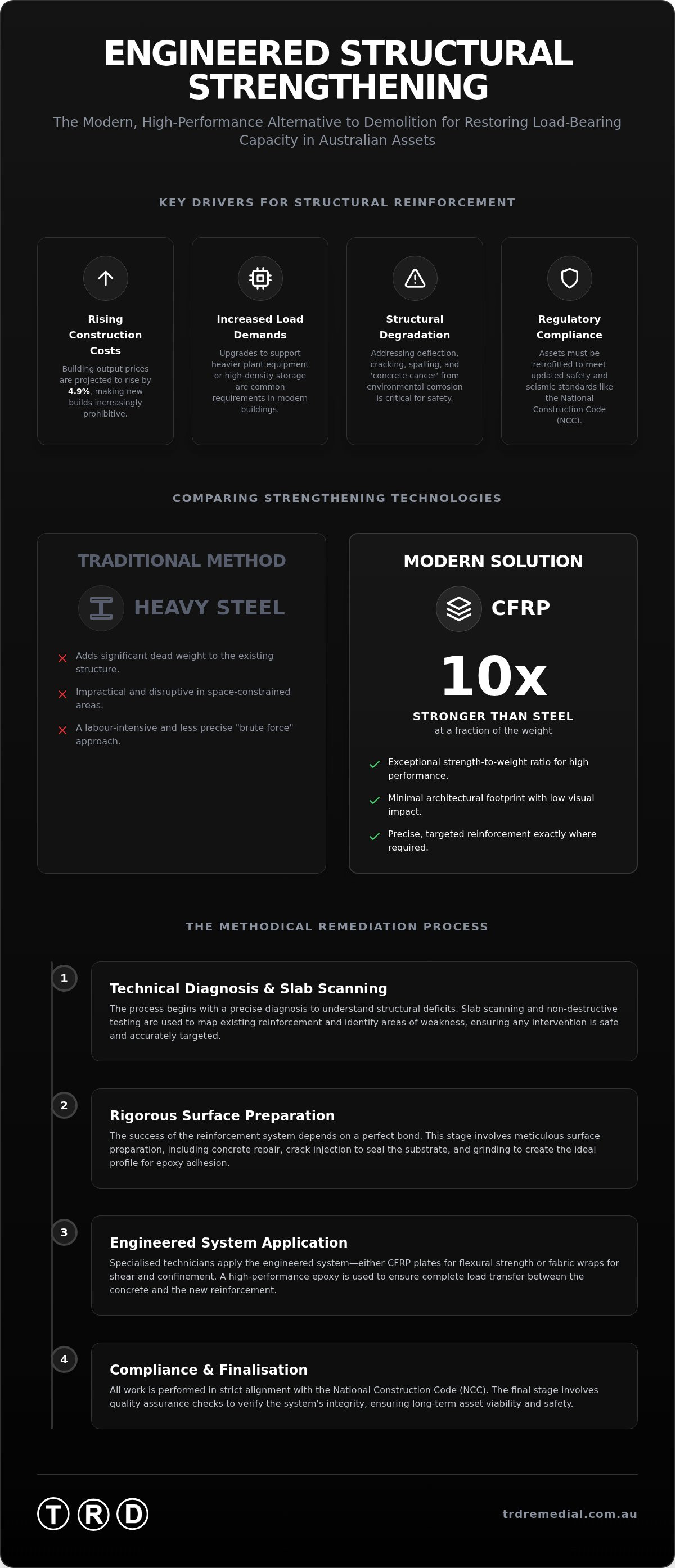
Successful reinforcement is never an isolated task. It requires a disciplined, multi-stage workflow that treats the building as a single, integrated system. High-performance structural strengthening solutions are only as effective as the substrate they are bonded to. This makes the transition from technical diagnosis to physical execution the most critical phase of any project. A methodical, engineered approach ensures that every reinforcement measure aligns with the original design intent and the current safety requirements of the asset.
Quality control must be embedded into every step. This includes monitoring environmental conditions during resin application and conducting pull-off bond strength testing upon completion. These measures verify that the load transfer between the new reinforcement and the parent concrete is seamless. Without this level of engineering rigor, the long-term viability of the remediation is left to chance.
Non-Destructive Testing and Slab Scanning
Precision begins before a single grinder touches the concrete. We use advanced Ground Penetrating Radar (GPR) for technical slab scanning to map the internal geometry of the structure. This process is non-negotiable for identifying the exact location of existing reinforcement and post-tension cables. It's an essential safety protocol before any core drilling or structural alterations take place. Striking a live post-tension cable can cause catastrophic structural failure and poses a severe risk to site personnel. Scanning also allows us to identify internal voids or delamination within the concrete. If these defects aren't identified and corrected, the strengthening system cannot distribute loads effectively, leading to localised stress concentrations and potential system failure.
Surface Preparation and Technical Execution
Surface preparation is the foundation of bond integrity. We utilise mechanical grinding and captive shot blasting to remove laitance, old coatings, and contaminants. This creates an open-pore texture that allows high-performance resins to penetrate the substrate. If the concrete shows signs of distress, we integrate technical crack injection into the workflow. By injecting low-viscosity epoxy resins into existing fissures, we stabilise the concrete matrix before applying external reinforcement. This integrated approach ensures the structural strengthening solutions are applied to a sound, monolithic base. Whether we are installing pultruded CFRP plates or high-tensile wraps, the application must be precise. The material is saturated with resin and applied using calibrated pressure to eliminate air pockets, ensuring the reinforcement is fully engaged with the structure from the moment the epoxy cures.
Ensuring Compliance and Longevity in Structural Remediation
Compliance in the remedial sector is the baseline for safety. While manufacturers focus on product specifications, a specialist contractor's role is to ensure those materials translate into an engineered outcome. Navigating the regulatory landscape for structural strengthening solutions requires more than just technical skill. It demands a disciplined adherence to Australian standards and a commitment to long-term asset viability. Every intervention must be documented precisely to provide asset managers and strata committees with a clear trail of compliance and structural integrity.
Balancing immediate repair needs with long-term protection is a strategic decision. A well-executed project doesn't just fix a current deficit. It prepares the building for future usage changes while maintaining its original architectural footprint. This foresight is what distinguishes an elite service provider from a general contractor. We handle the entire process from diagnosis to delivery, ensuring the reinforcement is both a strategic correction and a highly capable execution.
Adhering to Australian Engineering Standards
Structural alterations are governed by strict building codes. With the Australian Building Codes Board publishing NCC 2026 on May 1, 2026, and most states adopting it by October 1, 2026, staying current is essential. These updates refine existing requirements for structural safety and technical waterproofing. Every reinforcement project must start with an engineered design that accounts for the specific load-bearing requirements of the asset. We ensure that all materials, from high-tensile CFRP to specialised resins, meet high-performance Australian specifications. This rigorous approach guarantees that the structural strengthening solutions applied are not only effective today but remain compliant as regulations evolve.
Strategic Maintenance and Asset Protection
Longevity is achieved through proactive monitoring. Once strengthening elements are installed, they should be integrated into the building's regular inspection schedule. This allows for the early detection of any substrate changes or environmental impacts. Combining reinforcement with technical waterproofing and protective coatings offers the highest level of asset protection. This multi-layered approach is particularly effective in preventing concrete cancer and moisture ingress in exposed structural members. To support long-term asset management, we provide comprehensive documentation for all remedial works. These records are vital for:
- Maintaining accurate strata and compliance folders.
- Facilitating future building use changes or upgrades.
- Proving structural integrity during property valuations or sales.
- Ensuring warranty and insurance requirements are fully met.
By prioritising technical mastery and detailed record-keeping, you secure the structural future of your building while protecting its financial value. This methodical approach ensures your asset remains safe, compliant, and functional for decades to come.
Securing the Structural Future of Your Building
Restoring the load-bearing capacity of an asset requires more than just high-performance materials. It demands a disciplined, end-to-end approach that integrates technical diagnosis with precise execution. We've explored how advanced structural strengthening solutions like carbon fibre reinforcement provide a lightweight, compliant alternative to traditional steel, ensuring your building meets the rigorous standards of NCC 2026 without the need for intrusive demolition. From the initial slab scanning to the final bond strength testing, every phase of the remediation process must be handled with engineering rigor.
Choosing the right partner is the most critical factor in the success of your project. As specialist technical contractors, we provide engineered remediation solutions that prioritise safety, compliance, and long-term asset protection. Whether you're upgrading for new equipment or correcting structural defects, our team delivers national service across Australia to ensure your infrastructure remains viable for decades to come. Don't leave your building's integrity to chance. Consult the structural strengthening specialists at TRD Remedial today to discuss your project requirements. Your asset's longevity is our priority.
Frequently Asked Questions
What are the main benefits of carbon fibre structural strengthening?
Carbon fibre offers a superior strength-to-weight ratio compared to traditional steel reinforcement. It's approximately ten times stronger in tension while remaining remarkably lightweight. This material is entirely non-corrosive, making it ideal for Australian coastal environments where salt-laden air often causes concrete cancer. Because it's only a few millimetres thick, it provides high-performance reinforcement without altering floor-to-ceiling heights. The installation is also faster than steel, significantly reducing site disruption for active commercial assets.
How much does structural strengthening typically cost for a commercial building?
The cost of implementing structural strengthening solutions depends on several variables including the scale of the deficit, site accessibility, and the chosen reinforcement system. While carbon fibre materials have a higher unit price than steel, the total project expenditure is often lower due to reduced labour and equipment costs. Steel requires mechanical anchoring and heavy lifting, whereas composites are surface-bonded. Every project requires a bespoke engineered assessment to determine the most cost-effective path for your specific asset.
Can structural strengthening be performed while the building is occupied?
Yes, structural reinforcement can often be completed in occupied buildings with minimal disturbance. Unlike traditional steel plate bonding, which involves heavy machinery, drilling, and welding, carbon fibre application is a relatively quiet and clean process. It doesn't require mechanical fasteners or large-scale demolition. This allows businesses to continue operations while we stabilise the structure. We typically coordinate the technical execution in stages to ensure safety and maintain access for building occupants throughout the project.
What is the difference between flexural and shear strengthening?
Flexural strengthening is applied to the tension face of a structural member, such as the underside of a beam or slab, to increase its bending capacity. Shear strengthening involves applying reinforcement to the sides of a beam or wrapping a column to prevent diagonal tension failure. Both are critical structural strengthening solutions. While flexural work handles the primary load-bearing demands, shear reinforcement ensures the member doesn't fail near its supports under high stress or increased plant loads.
How long does carbon fibre strengthening last once applied?
When applied correctly by specialist contractors, carbon fibre strengthening is designed to last for the remaining service life of the building. The material itself is chemically inert and doesn't rust or degrade over time. Its durability is significantly higher than steel in humid or corrosive environments. To ensure maximum longevity, the substrate must be stabilised with technical crack injection and protected with appropriate coatings. Regular post-installation monitoring ensures the bond integrity remains sound for decades.
Is slab scanning necessary before installing structural reinforcement?
Slab scanning is an essential safety requirement before any structural work begins. We use Ground Penetrating Radar (GPR) to locate existing reinforcement, post-tension cables, and electrical conduits within the concrete. This prevents accidental strikes during the preparation phase, which could lead to catastrophic structural failure or injury. Scanning also identifies internal voids or defects. Identifying these issues early allows us to correct the substrate before applying reinforcement, ensuring the new system performs as engineered.
How do I know if my building requires structural strengthening?
Signs that your building may require reinforcement include visible cracks, excessive floor deflection, or concrete spalling. You should also consider strengthening if you're planning a change of use, such as installing heavy HVAC plant equipment or high-density storage. Compliance with updated Australian standards, like NCC 2026, often necessitates structural upgrades. If you notice structural distress or are planning significant alterations, a professional engineered assessment is required to diagnose the extent of any load-bearing deficits.
Does structural strengthening add significant weight to the existing structure?
Carbon fibre reinforcement adds negligible weight to the existing structure. It's a lightweight composite that provides immense tensile strength without increasing the dead load of the building. This is a major advantage over traditional steel plates or concrete section enlargement, which can add tonnes of extra mass. By using low-profile composites, we avoid the need for foundation upgrades. This makes it the preferred method for reinforcing slabs and beams in buildings with limited reserve capacity.


