

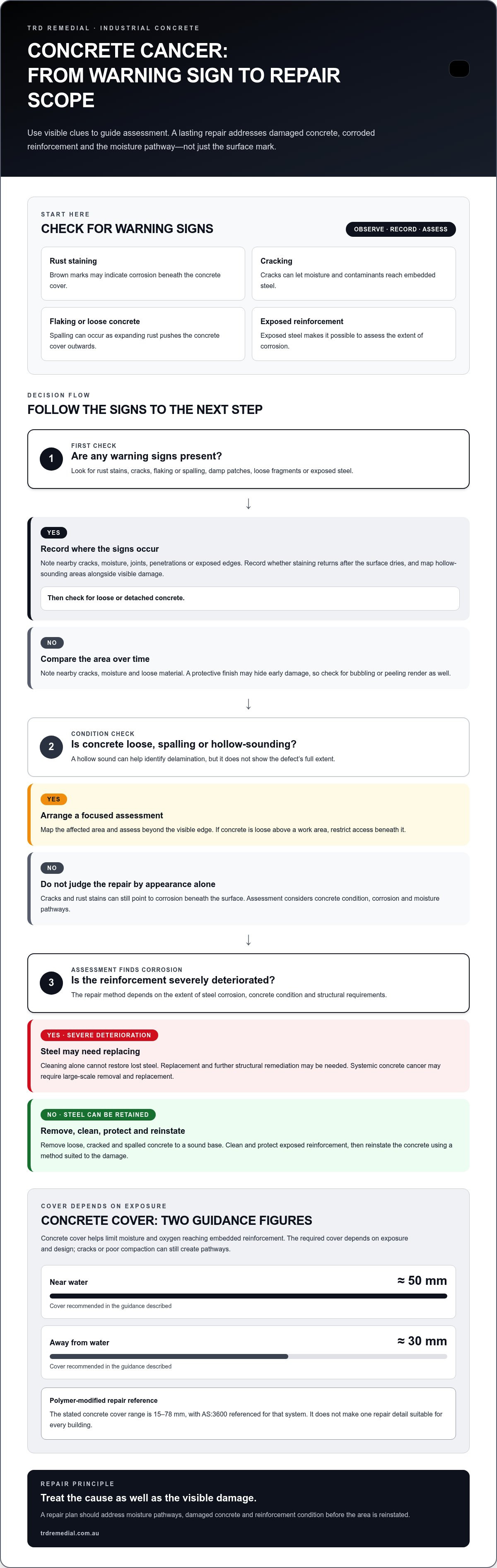
Rust stains, cracking, flaking concrete and exposed reinforcement are warning signs of concrete cancer. Effective industrial concrete cancer treatment removes damaged concrete, cleans and treats corroded steel, then restores the area using a method suited to the damage. If reinforcement is severely deteriorated, it may need replacing.
It’s understandable to focus on visible damage, but effective repair also addresses what’s happening beneath the surface. Water and oxygen can reach embedded steel through cracks or porous concrete, causing corrosion that pushes surrounding concrete loose.
This guide explains how to recognise the signs, why they occur and how assessment establishes the extent of damage. It also covers concrete patching, crack injection and replacement, as well as ways to reduce the risk of deterioration returning.
Key Takeaways
- Rust staining, cracking, flaking concrete and exposed reinforcement can signal corrosion beneath the surface. Recognising the signs early helps you understand when an assessment is needed.
- Concrete cover helps shield reinforcing steel from moisture and oxygen. The recommended cover varies with exposure, including around 50 mm near water and around 30 mm away from water.
- Lasting repairs address both the damaged concrete and the reinforcement: affected areas are removed, steel is cleaned or replaced where necessary, and the concrete is reinstated.
- Patching, crack injection and section replacement suit different damage and structural conditions. Learn what each approach can address before deciding on a repair method.
Does my building have concrete cancer?
Concrete cancer occurs when moisture and oxygen reach reinforcing steel and start corrosion. Expanding rust can crack the concrete, loosen its cover and threaten structural integrity.
Reinforcement cover and corrosion prevention
Concrete cover is the cement-based layer between the surface and embedded reinforcement, helping limit moisture and oxygen reaching steel. In the guidance described here, around 50 mm of cover is recommended near water, compared with around 30 mm away from water. Cover needs depend on exposure and design. Too little can leave reinforcement vulnerable; cracks or poor compaction can also provide pathways through otherwise adequate cover.
Moisture intrusion and steel corrosion
Moisture can carry water and contaminants through cracks, poorly compacted concrete or construction joints towards reinforcement. When moisture and oxygen reach steel, corrosion produces rust that expands and presses against the surrounding concrete. Rust stains, cracking and spalling may follow. Carbonation can also lower concrete’s pH, reducing its protection of embedded steel. Concrete cancer repair needs to address the source of moisture as well as visible damage, rather than simply covering a stain or crack.
Assessment and repair standards
Australian assessment and repair requirements depend on the building, structural element, exposure and repair method. For polymer-modified repairs, the stated concrete cover range is 15-78 mm, with AS:3600 referenced for that system. This does not make one repair detail suitable for every warehouse or factory. An assessment considers the extent of corrosion, concrete condition and moisture pathways before remediation is selected. Where steel is exposed, the repair process removes loose or damaged concrete, cleans the reinforcement and protects or replaces it as required before reinstatement.
Risks of untreated concrete cancer
In warehouses and factories, ongoing corrosion can dislodge concrete, expose reinforcement and weaken affected structural elements. Falling fragments can create hazards, while spreading damage can complicate access and disrupt operations. A repair plan can limit disruption by defining work zones, isolating affected areas and coordinating noisy or dusty tasks with site activity. If steel is badly deteriorated, cleaning alone may not restore its strength; replacement and further structural remediation may be needed. Early assessment clarifies the repair scope and helps prevent a local defect from affecting a larger working area.
Early signs such as rust stains, cracks and spalling
Visible changes can point to deterioration beneath the concrete, but each sign needs context. Compare affected areas over time and note nearby cracks, moisture and loose material.
Rust stains and surface cracking
Rust stains and cracks can indicate corrosion of reinforcing steel beneath the concrete cover. A narrow crack beside a brown stain, for example, may mark where moisture has reached embedded steel. Rust takes up more space than the original steel, putting pressure on the surrounding concrete and widening cracks. Record each location and whether the crack is near a joint, penetration or exposed edge. These details help distinguish a local surface mark from a developing structural defect.
Moisture penetration and spalling
Spalling is concrete that flakes or breaks away, which can happen as corrosion pushes the cover outwards. Moisture entering through a crack, construction joint or poorly compacted area can carry contaminants deeper into the concrete. Chloride contamination can contribute to corrosion of embedded reinforcement. Look for damp patches, rust marks and loose fragments together; this combination warrants closer assessment. A protective surface finish may hide early damage, so also check for bubbling or peeling render.
Delamination beneath the surface
Delamination occurs when a layer of concrete separates internally, sometimes before pieces fall away and visible spalling appears. A hollow sound when the surface is tapped can help identify a detached layer, but it does not show the full extent of the defect. Map hollow-sounding areas alongside cracks, rust stains and exposed steel. In a factory wall, for instance, a small surface chip may sit beside a wider area of weakened concrete. Repair methods need to account for the hidden extent, not just the visible edge.
Cracks can also allow ongoing water ingress, so note whether staining returns after the surface dries. If damage is spreading or concrete is loose above a work area, restrict access beneath it and arrange a focused assessment. A documented inspection of affected surfaces helps define the next remediation step. Consider professional spalling assessment when signs point to more than cosmetic damage.
Removing damaged concrete and rusted reinforcement
Repair begins by exposing the affected area and establishing how far deterioration extends. The method depends on the concrete’s condition, the extent of steel corrosion and structural requirements.
Removing damaged concrete
Mechanically remove loose, cracked and spalled concrete to reach a sound base. Exposed reinforcement reveals whether corrosion is limited or extends beyond the visible defect. Steel with extensive deterioration may need removal and replacement; cleaning alone cannot restore lost steel. Systemic concrete cancer may require large-scale removal and replacement. The surrounding concrete must also provide a stable edge for reinstatement, rather than leaving weakened material beneath a new patch.
Cleaning and treating reinforcement
Cleaning and treating reinforcement involves removing corrosion from exposed steel before applying protective treatment and reinstating the concrete. In polymer repairs, steel may be ground back to a bright finish and coated with zinc-rich primer. This prepares the reinforcement for repair material and helps protect it from further corrosion. If steel has deteriorated beyond repair, replacement may be necessary. The treatment should suit the observed condition and causes of corrosion, including moisture or chloride exposure.
Restoring reinforcement cover
Reinforcement cover is the concrete layer protecting embedded steel from moisture and oxygen. Repair material must restore the concrete profile around cleaned or replaced bars, while maintaining suitable cover for the exposure and design. The stated cover range for the polymer-modified repair system is 15-78 mm, with AS:3600 referenced for that system. Cover that is too thin can leave steel vulnerable; simply applying a surface coating won’t correct inadequate concrete around a bar.
Where fibre reinforcement fits
Fibre Reinforced Polymer (FRP), including carbon fibre, is a strengthening method, not a substitute for removing corroded steel. It may form part of a broader structural repair if assessment identifies a need to strengthen the repaired element. The sequence matters: address damaged concrete and reinforcement first, then determine whether additional strengthening is required. This keeps corrosion remediation distinct from restoring structural capacity, so each method serves its intended purpose.
Concrete patching, crack injection and replacement
Once corrosion and its cause are addressed, the repair method depends on crack movement, the extent of damage and structural requirements. Patching, injection and replacement solve different problems, so choosing the right method matters for both the repaired surface and the surrounding concrete.
Patching restores a localised area after unsound concrete and affected reinforcement have been dealt with. The repair void can be reinstated with a high-strength cementitious mix or filled epoxy compound, selected for the repair conditions and required performance. Formwork can contain material where the patch is deep or overhead. The finished surface can be shaped to match the surrounding profile, then cured and protected. A patch restores the area, but won’t stop water entering through an untreated nearby crack.
Crack injection is used where a suitable crack needs filling and its separated faces need binding. Epoxy or polyurethane resin can be pumped under pressure into the crack, filling voids through the concrete. Epoxy injection can reinforce concrete vulnerabilities, while the appropriate resin depends on the crack and repair objective. Injection is not a substitute for removing loose concrete or replacing badly corroded steel. Where water ingress continues, the source also needs attention, or moisture may keep reaching the repaired area.
Replacement is suitable for sections too extensively damaged for a local patch. The affected concrete is removed, reinforcement is assessed and the section is rebuilt to restore its profile and structural function. Severe or systemic deterioration may require larger-scale removal and replacement. This is more extensive than filling a crack, so the extent of damage to concrete and steel guides the scope. Waterproofing can help limit moisture entry during reconstruction and protect the reinstated section.
The practical takeaway: repair the defect that exists, not just the mark visible on the surface. A stable crack, a local spall and a severely deteriorated section call for different techniques. Concrete repairs should also consider curing and protective coatings to reduce renewed water ingress. For a repair approach matched to patching, injection or replacement, discuss concrete repair options.
TRD Remedial: Carbon Fibre Strengthening
TRD Remedial provides carbon fibre strengthening when an assessed concrete element needs additional structural support. This can reinforce a repaired element, but it does not replace the removal of deteriorated concrete or treatment of corroded steel. Repair and strengthening address different needs.
For industrial concrete cancer, the sequence matters: address damaged concrete and reinforcement, then consider whether strengthening is needed. TRD Remedial also provides concrete repairs and crack injection for relevant defects. These services can suit facilities where corrosion damage, cracking or reduced structural capacity requires remedial work. The appropriate approach depends on the defect and the element’s condition.
Contact TRD Remedial to discuss your concrete repair needs, or visit trdremedial.com.au.
Set the next repair decision in motion
Use assessment findings to shape a practical asset plan: record priority areas, coordinate access with site operations and connect repair decisions to the building’s longer-term maintenance. A sound industrial concrete cancer treatment plan distinguishes corrosion remediation from any separate need to strengthen a structural element. This helps teams scope work around the actual defect instead of treating every visible mark alike.
TRD Remedial provides Carbon Fibre Strengthening, Structural Strengthening and Crack Injection for relevant concrete and structural issues. These services address distinct needs, from strengthening an element to treating a suitable crack. The appropriate scope depends on the structure’s condition and requirements.
Take the next step by outlining the affected areas and the concerns they raise. Contact TRD Remedial about concrete cancer to discuss your repair needs and plan a considered way forward.
Frequently Asked Questions
Epoxy vs Cementitious Repair?
Epoxy and cementitious materials serve different repair purposes. Epoxy injection is used to bind suitable structural cracks, while cementitious repair mortar can reinstate a concrete void after damaged material is removed. The choice depends on the defect, required structural function and exposure conditions. Injection resin isn’t interchangeable with patching mortar, so the repair specification should match the damaged element and the work being performed.
Is cracking really a serious structural issue?
A crack can be cosmetic, but it can also signal movement, water entry or reinforcement corrosion. Its location, direction, activity and relationship to nearby spalling help establish its significance. For example, a crack accompanied by rust staining or recurring dampness warrants closer assessment than an isolated surface mark. Cracks crossing a load-bearing element or changing over time call for prompt technical investigation before repairs are selected.
What Repair Options Are There?
Options include local concrete patching, crack injection and removing and replacing severely damaged sections. The choice of repair material depends on the crack, the required structural function and whether water ingress needs to be addressed. If the concrete has been reinstated but the element still needs added capacity, structural strengthening may also be considered. The right industrial concrete cancer treatment depends on whether the main issue is a void, a crack, active water ingress or reduced structural capacity.
What is concrete cancer in industrial buildings and what causes it?
Concrete cancer is deterioration linked to corrosion of reinforcing steel embedded in concrete. Moisture and oxygen can reach the steel through cracks or porous areas, while carbonation can reduce concrete’s protection. Chlorides carried into concrete by moisture can also trigger corrosion. Poor compaction, inadequate cover, construction joints and concrete damage can create pathways, so different areas of a warehouse or factory may have different causes.
What are the signs of concrete cancer in industrial concrete structures?
Common warning signs include rust staining, cracking, flaking or breaking concrete, exposed reinforcement and bubbling or separating render. Increased water ingress can indicate moisture is reaching vulnerable areas. In an industrial setting, note whether signs cluster around joints, penetrations or areas exposed to water. Staining combined with loose concrete is more concerning than a stain alone because it may indicate corrosion beneath the surface.
How is concrete cancer diagnosed and assessed in Australia?
Assessment combines a visual inspection with targeted investigation of the concrete and reinforcement. Depending on the suspected cause, this may include moisture mapping, diagnostic coring or chloride sampling. The assessment records deterioration extent, moisture pathways and steel condition to guide repair scope. Australian repair materials and resins used by TRD Remedial are described as complying with Australian Standards, including AS 3600. Findings help distinguish local patch repairs from broader remediation needs.


