

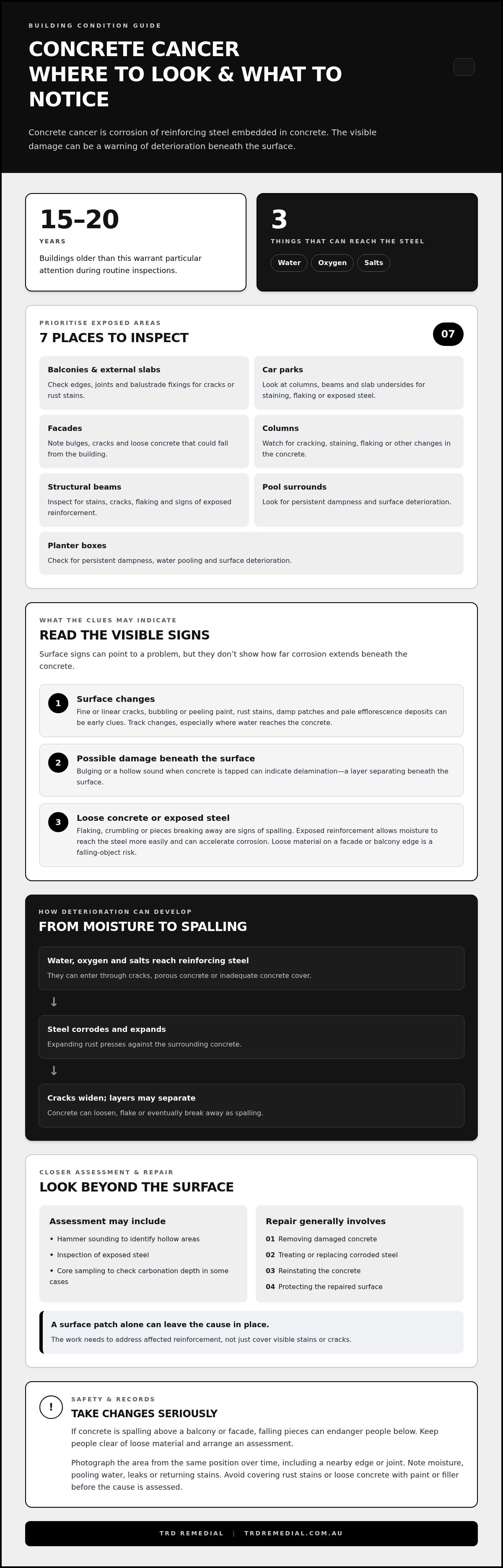
Concrete cancer warning signs often appear where concrete is exposed to water and weather, including balconies, car parks, facades, columns, beams, pool surrounds and planter boxes. Look for rust stains, cracks, bulging or flaking concrete, and pieces breaking away. These signs can point to corrosion of the steel reinforcement inside the concrete.
A small crack or patch of peeling paint can look like a surface issue. But when water, oxygen and salts reach reinforcing steel, corrosion can make it expand, crack the surrounding concrete and cause spalling. Exposed steel can speed up deterioration, so don’t dismiss changes.
This guide explains where concrete cancer tends to develop and how to recognise early signs, from discolouration and damp patches to hollow-sounding areas and loose concrete. It also explains how moisture, salt exposure, carbonation and inadequate concrete cover contribute, helping you understand what visible damage may mean and when it needs closer assessment.
Key Takeaways
- Prioritise checks in exposed areas such as balconies, car parks and facades, where water can reach embedded steel.
- Notice early changes, including rust marks, fine cracks, bubbling paint or damp patches, before concrete starts breaking away.
- Understand how moisture, salt and carbonation can weaken the protection around reinforcing steel and contribute to corrosion.
- Pay attention to hollow-sounding or bulging areas, as damage may extend beneath the visible surface.
- Use the signs and likely causes to judge when concrete deterioration needs a closer technical assessment.
Where does concrete cancer tend to appear?
Concrete cancer is corrosion of reinforcing steel embedded in concrete. Water, oxygen and salts can reach the steel through cracks, porous concrete or inadequate concrete cover. As the steel rusts, it expands and presses against the surrounding concrete. Cracks can widen, layers can separate, and pieces may eventually break away as spalling.
Damage often appears where concrete is exposed to rain, persistent dampness or water entry. Balconies are vulnerable when rain reaches the slab or waterproofing fails. Car parks, facades, columns, structural beams, swimming pool surrounds and planter boxes are also worth inspecting. Rusted balustrade fixings can cause localised cracks and spalling around balconies and external slabs.
- Balconies and external slabs: Look around edges, joints and balustrade fixings for cracks or rust stains.
- Car parks: Check columns, beams and slab undersides for staining, flaking or exposed steel.
- Facades: Note bulges, cracks and loose concrete that could fall from the building.
- Planter boxes and pool surrounds: Watch for persistent dampness, water pooling and surface deterioration.
Rust stains on concrete can indicate corrosion inside, even before reinforcing steel becomes visible. Linear cracks may follow the path of embedded reinforcement. Bulges or hollow sounds when concrete is tapped can indicate delamination, where a layer has separated beneath the surface. These signs warrant attention, but visible damage alone doesn’t show how far corrosion extends.
Spalling describes concrete that flakes, cracks, loosens or falls away. It is visible damage, while concrete cancer refers to the underlying reinforcing-steel corrosion that may cause it. Once steel is exposed, moisture can reach it more easily and accelerate corrosion. Small cracks can also widen over time as expanding rust presses against the surrounding concrete.
Repair generally involves removing damaged concrete, treating or replacing corroded steel, reinstating the concrete and protecting the repaired surface. The work needs to address the affected reinforcement, not just cover visible stains or cracks. A surface patch over corroded steel leaves the underlying cause in place.
In Australia, strata or home insurance may not cover concrete cancer unless a covered event caused it. Whether a claim is covered depends on the policy terms and the cause of the damage.
Buildings older than 15-20 years warrant particular attention during routine inspections. A specialist assessment can use hammer sounding to identify hollow areas and inspect exposed steel; core sampling can help check carbonation depth in some cases. If concrete is spalling above a balcony or facade, falling pieces can endanger people below, so treat the location as a safety concern.
What are the early signs of concrete cancer in buildings?
Early changes can appear in the surface finish before reinforcement becomes visible. Track cracks, stains and paint changes over time, especially where water reaches the concrete.
Cracks and fractured concrete
Cracks are splits in the concrete surface, while fractured concrete has broken into visibly separate sections. Even a fine line can let water, oxygen and salts reach embedded reinforcement, where corrosion may develop. Watch for cracks that widen, branch or develop rust staining. Cracks near a balcony edge, slab joint or column deserve attention because these areas may be exposed to water and weather.
Bubbling paint and rust stains
Bubbling, peeling or delaminating paint can indicate moisture trapped beneath a concrete surface. Reddish-brown rust stains can point to corrosion of reinforcing steel below the finish. Note where each mark appears and whether it returns after the surface dries. For example, a stain beneath a balcony joint alongside bubbling paint may indicate ongoing moisture movement, not simply a paint defect.
Chips, flaking and crumbling
Chips are local breaks in the surface; flaking and crumbling show concrete loosening or breaking apart. These changes can indicate spalling associated with expanding, corroded reinforcement. Record whether the damaged area is growing or revealing steel. Loose material on a facade or balcony edge also creates a falling-object risk. Keep people clear of the area and arrange an assessment.
Check the surrounding concrete as well as the most obvious mark. A single crack beside an intact surface differs from a patch with several cracks, rust stains and peeling paint. Photograph the area from the same position over time, including a nearby edge or joint for context. This record helps show whether the damage is changing.
Moisture provides useful context. Check for damp patches, pooling water, leaks or efflorescence, the pale deposits left when water carries salts through concrete. For instance, a balcony slab with efflorescence and cracking shows both visible damage and signs of water movement. These clues help explain where deterioration may be progressing.
Surface signs don’t reveal the full extent of hidden damage. A hollow sound when concrete is tapped can indicate delamination beneath the surface. Exposed reinforcement is a stronger warning because corrosion can accelerate when steel contacts moisture and air. Avoid covering rust stains or loose concrete with paint or filler before the cause is assessed.
For cracks that need repair, crack injection may be relevant after the damage and its cause are assessed. Monitoring changes and noting nearby moisture helps clarify what the visible signs may indicate.
Water ingress, salt, carbonation and inadequate concrete cover
Moisture is a key pathway to reinforcement corrosion. Water entering through a balcony membrane, cracked joint or leaking gutter can carry oxygen and dissolved salts into concrete. Once steel reinforcement loses its protection, corrosion can develop and damage the surrounding concrete. Persistent damp patches, ponding water and efflorescence are clues that moisture may be moving through a structure, which often serve as early concrete cancer warning signs.
Fresh concrete's high alkalinity protects embedded steel. Over time, carbonation occurs as carbon dioxide penetrates concrete and lowers its pH, weakening that protective environment. If carbonation reaches the reinforcement, steel becomes more vulnerable to rusting when moisture and oxygen are present. Chloride salts can also undermine the steel's protection. In coastal locations, salt air is one possible source of chlorides; water can carry them through cracks or porous concrete.
Concrete cover is the protective layer between the surface and the steel. Insufficient cover can leave reinforcement vulnerable sooner, while worn or porous concrete can allow water to penetrate. AS 3600 is the standard relevant to concrete cover over reinforcing steel in buildings. Buildings constructed before the 1990s commonly have lower cover than modern standards require. Age alone doesn't prove damage, but it helps explain why the concrete's condition and exposure matter when identifying concrete cancer warning signs.
Waterproofing and drainage reduce the opportunity for moisture to reach reinforcement. Balcony membranes usually last 10 to 15 years before they begin to fail. Sealants and expansion joints often need attention every 5 to 7 years. These periods make maintenance relevant, but visible signs such as dampness, cracking or efflorescence should also guide inspection.
- Check water pathways: Look for ponding, damaged joints, leaks from roofs or gutters, and damp concrete beneath balconies.
- Maintain drainage: Keep drainage routes clear so water doesn't remain against slabs or walls.
- Inspect waterproofing: Look for membrane deterioration, failed sealant and recurring water stains around joints.
- Protect vulnerable surfaces: Protective coatings or overlays can help limit moisture entry where suitable.
- Address cracks: Sealing cracks can restrict water access, but it doesn't treat corrosion already affecting embedded steel.
For example, efflorescence on a balcony slab alongside a failed joint can indicate water moving through the concrete. Both the entry point and the affected structure need attention. Surface patching alone won't stop corrosion if steel remains damp beneath the repair. A structural inspection by TRD Remedial should consider moisture sources, concrete condition, cover and signs of reinforcement corrosion. Keeping water out supports durability and safety, but existing damage needs assessment before protective work is selected.
Coastal salt-air exposure and corrosion risk
Coastal salt air can increase corrosion risk where chloride reaches reinforcing steel inside concrete. In Sydney, exposed balconies and facades deserve attention alongside signs of moisture entry.
Coastal salt-air exposure
Coastal salt-air exposure means concrete is regularly exposed to airborne salts, which can contribute to steel corrosion. The risk increases where concrete is also damp, cracked or porous, because moisture can help salts move towards embedded reinforcement. For example, a seaward-facing balcony with recurring damp patches needs attention to both its exposed position and water pathways, not just its surface appearance.
Chloride-induced corrosion
Chloride-induced corrosion occurs when chloride ions reach reinforcing steel and undermine its protective conditions. Salt air is one potential source in coastal and high-humidity environments such as Sydney. Cracks, worn concrete and inadequate cover can provide routes towards the steel. A crack on an exposed slab, for example, matters more when dampness or rust staining appears nearby, because these clues suggest moisture and corrosion may coincide.
How corrosion damages concrete
Corrosion damages concrete as rust forms and expands around reinforcing steel inside the structure. The expanding steel puts pressure on the surrounding concrete, which can crack, delaminate and eventually break away as spalling. Once reinforcement is exposed, moisture and oxygen can reach it more readily, helping deterioration continue. A loose patch above a balcony signals both material damage and a possible falling-concrete hazard.
Balustrade fixings are a specific inspection point on coastal balconies. Corroded fixings can cause localised cracking, delamination and spalling around the attachment. Look for rust marks or cracks radiating from a fixing, then note whether concrete has lifted or loosened nearby. A clean-looking surface elsewhere on the balcony doesn’t rule out local damage around these steel connections.
On an exposed facade, bubbling render, cracked tiles or rust staining can help identify moisture-related deterioration. These signs don’t reveal the full extent of corrosion, but their position can guide a closer inspection. Compare affected sections with nearby concrete, especially around joints and fixings where water can enter.
During a visual check, record the location of each crack, stain or bulge, and whether reinforcement is visible. Check balcony edges, slab undersides and balustrade bases separately. If concrete is loose above a path or occupied area, keep people clear of the immediate drop zone while the hazard is assessed.
Coastal exposure is a risk factor, not proof that concrete cancer is present. Salt exposure, moisture, cracking and damage together provide a more useful picture than location alone. A specialist assessment can examine surface signs and exposed steel to establish whether corrosion is affecting the concrete.
Concrete cancer warning signs
Look for patterns in surface changes rather than treating each mark in isolation. A rust stain beside a crack, damp patch and bulging finish gives more reason for concern than a dry, unchanged mark alone. In buildings, location and progression help identify which areas need prompt attention.
Start with a visual check of each concrete area, such as a balcony, facade, column or car park slab. Note the exact position of cracks, stains, bubbling render, loose pieces and exposed reinforcement. Check nearby joints and fixings too. A crack beside a balustrade base, for example, has a different context from a mark on an otherwise dry interior wall.
- Rust stains: Look for reddish-brown marks emerging from a crack, joint or fixing.
- Surface movement: Note bulges, expanding joints, bubbling paint or tiles that have started cracking.
- Concrete loss: Record chips, flaking edges, loose fragments and areas where steel is exposed.
- Moisture clues: Look for leaks, damp patches, water pooling or pale efflorescence deposits.
Compare your observations over time. Photograph the same area from the same position, and record whether a crack lengthens, a stain returns or a loose patch grows. For a strata balcony, include the slab edge, underside and balustrade fixing in the inspection record. This creates a useful account of change without disturbing the concrete.
Clusters of signs deserve more attention than a single unexplained mark. For instance, a damp balcony edge with rust stains and flaking concrete presents several connected indicators: water is present, corrosion may be affecting reinforcement, and the surface is breaking down. Bubbling render beside a leaking joint is another reason to investigate moisture entry and the surrounding concrete.
Exposed reinforcement is a serious sign because direct contact with moisture and oxygen can accelerate rusting. Loose concrete above a balcony, entrance or footpath also creates a falling-material hazard. Keep people clear of the area below, avoid knocking or removing fragments, and arrange an assessment of the affected structure.
Visible signs can’t show the full extent of concealed damage. A qualified assessment considers the location, moisture conditions, crack pattern, exposed steel and condition of surrounding concrete. The distinction matters: surface flaking can have causes other than steel corrosion, while corrosion can continue underneath a neat-looking patch.
Early assessment helps establish whether the signs point to reinforcement corrosion and what repair scope is appropriate. If a balcony, facade or slab shows progressive cracking, rusting or spalling, arrange an assessment of concrete damage before the affected area deteriorates further.
TRD Remedial: Carbon Fibre Strengthening
TRD Remedial provides Carbon Fibre Strengthening for structures that need additional capacity. It can form part of a remedial approach when an assessment identifies a need to strengthen a concrete element, but it doesn’t replace treating corroded reinforcement or repairing spalled concrete.
Where corrosion has damaged concrete, the repair scope may include Concrete Repairs to address deteriorated areas. Crack Injection can also address suitable cracks, while Structural Strengthening may be appropriate when the structure needs reinforcement beyond local repairs. The right approach depends on the observed damage and the structural requirements of the affected element.
If cracks, exposed steel or spalling have appeared, contact TRD Remedial to discuss the damage and appropriate remedial work.
Turn your observations into a clear next step
The concrete cancer warning signs you’ve recorded can help guide a practical discussion about the affected structure. Note where the damage appears, how it has changed and whether moisture continues to enter. This gives an assessment a useful starting point and helps distinguish immediate safety concerns from work that can be planned.
The appropriate response depends on the structural need. TRD Remedial provides Concrete Repairs and Crack Injection for relevant damage, as well as Structural Strengthening and Carbon Fibre Strengthening where additional strengthening is required. These are distinct interventions, not substitutes for identifying the cause and extent of deterioration.
If you’re deciding what to do next, share your observations and discuss the condition of the affected concrete with TRD Remedial. Contact TRD Remedial for advice about a suitable remedial approach. A clear assessment can help you move from uncertainty to an organised plan for the structure.
Frequently Asked Questions
How do you inspect a facade for concrete cancer?
Begin with a visual check from a safe position, noting cracks, rust marks, bulges, bubbling finishes and loose concrete. Record each location and photograph it for comparison. Don’t climb onto ledges or disturb loose pieces. A specialist assessment can examine exposed steel and use hammer sounding to detect hollow areas; core sampling may be used to check carbonation depth. Falling concrete needs prompt attention to protect people below.
Is concrete cancer common in Sydney?
Concrete cancer can occur in Sydney buildings, and coastal salt air and high humidity can increase corrosion risk. Exposure alone doesn’t establish that a building has damage. A seaward-facing balcony with persistent dampness, rust staining and cracking presents more reason for assessment than location by itself. Building condition, concrete cover, water entry and maintenance history all help explain the risk in a particular structure.
Can concrete cancer be prevented during construction?
Construction practices can reduce risk, but prevention depends on protecting reinforcement and limiting water entry throughout a building’s life. Appropriate concrete cover, sound mixing and curing, well-detailed joints and effective waterproofing all matter. For example, a balcony with poorly managed drainage may remain exposed to water even if its concrete was initially sound. Ongoing inspection and maintenance are still needed to identify membrane failure, cracks or blocked drainage.
Concrete cancer vs concrete spalling: what is the difference?
Concrete cancer describes deterioration associated with corrosion of steel reinforcement; spalling describes concrete that flakes, loosens or breaks away. Spalling can be a visible result of concrete cancer, but it doesn’t prove corrosion is the cause. Fire or freeze damage can also cause spalling. Identifying the cause matters because replacing surface material alone won’t resolve corrosion continuing around embedded steel.
Does age matter?
Yes, age can affect risk because concrete cover, construction quality and waterproofing condition influence how quickly reinforcement loses protection. Australian buildings older than 15-20 years are identified as needing particular attention through routine inspections. Age isn’t proof of deterioration, however. A newer building can also develop problems if waterproofing fails unnoticed; some buildings less than 15 years old have had significant concrete cancer after early membrane failure.
What causes concrete cancer to develop over time?
Concrete cancer develops when reinforcing steel corrodes after its protective conditions are weakened. Water, oxygen and salts can enter through cracks, porous concrete or failed joints; carbonation can also reduce concrete’s alkalinity. A leaking roof, for example, may keep a beam damp and create conditions for corrosion. As rust expands, cracking and separation can follow, allowing more moisture to enter and deterioration to continue.
What is Concrete Cancer and How Can You Avoid or Treat It?
Concrete cancer is deterioration linked to corrosion of steel reinforcement within concrete. Reduce risk by maintaining waterproofing and drainage, sealing cracks and addressing persistent leaks before they keep concrete damp. If damage is present, repairs generally involve removing affected concrete, treating or replacing corroded steel, reinstating the concrete and protecting the surface. Repairs must address the cause and affected reinforcement, not just conceal visible damage.
What does “concrete cancer” mean in Australia?
In Australia, “concrete cancer” is a common term for damage associated with corrosion of reinforcing steel embedded in concrete. It isn’t the name of a specific cancer or a concrete product. The term describes a deterioration process that may show as cracking, rust staining or concrete breaking away. Because similar surface damage can have other causes, identify the underlying mechanism before selecting repairs.


