

Can shoring wall crack injection control active water ingress without compromising the wall or excavation? A leak can disrupt below-ground spaces and construction work, but the crack’s cause and movement status may be unclear. Sealing the leak does not confirm the wall’s structural adequacy. The repair needs to reflect the wall’s condition and the project requirements.
This guide explains why shoring walls crack, what injection can and cannot achieve, and how to plan a repair that addresses water ingress alongside structural performance. It covers the site conditions that shape remediation, including crack behaviour, water movement and access, and explains why diagnosis should inform the repair approach.
TRD Remedial provides shoring wall crack injection and water ingress crack repairs for residential, commercial and industrial projects, working with builders, engineers and strata managers. Understanding the purpose and limits of injection helps project teams plan a considered repair rather than treat the visible leak in isolation.
Key Takeaways
- A crack can provide a pathway for water, but its appearance alone does not establish why it formed or whether the wall is moving.
- Shoring wall crack injection places a selected repair material into a prepared crack or water pathway to help seal or control ingress.
- Choosing between flexible polyurethane and epoxy depends on the repair objective, water behaviour and crack condition, not a one-size-fits-all rule.
- A considered plan documents symptoms, reviews available wall information, assesses site conditions and sets out how the repair will be carried out and reviewed.
- Coordination with builders, engineers and site teams helps align remediation with project conditions where structural or excavation factors warrant it.
What causes cracks and water ingress in a shoring wall?
A shoring wall retains surrounding ground during excavation or below-ground construction. Cracks can form in the wall or at joints and construction interfaces, but their appearance alone does not reveal the cause. Site conditions, wall behaviour and available project information all matter. A visible crack is not, by itself, proof of either a structural defect or a harmless surface issue.
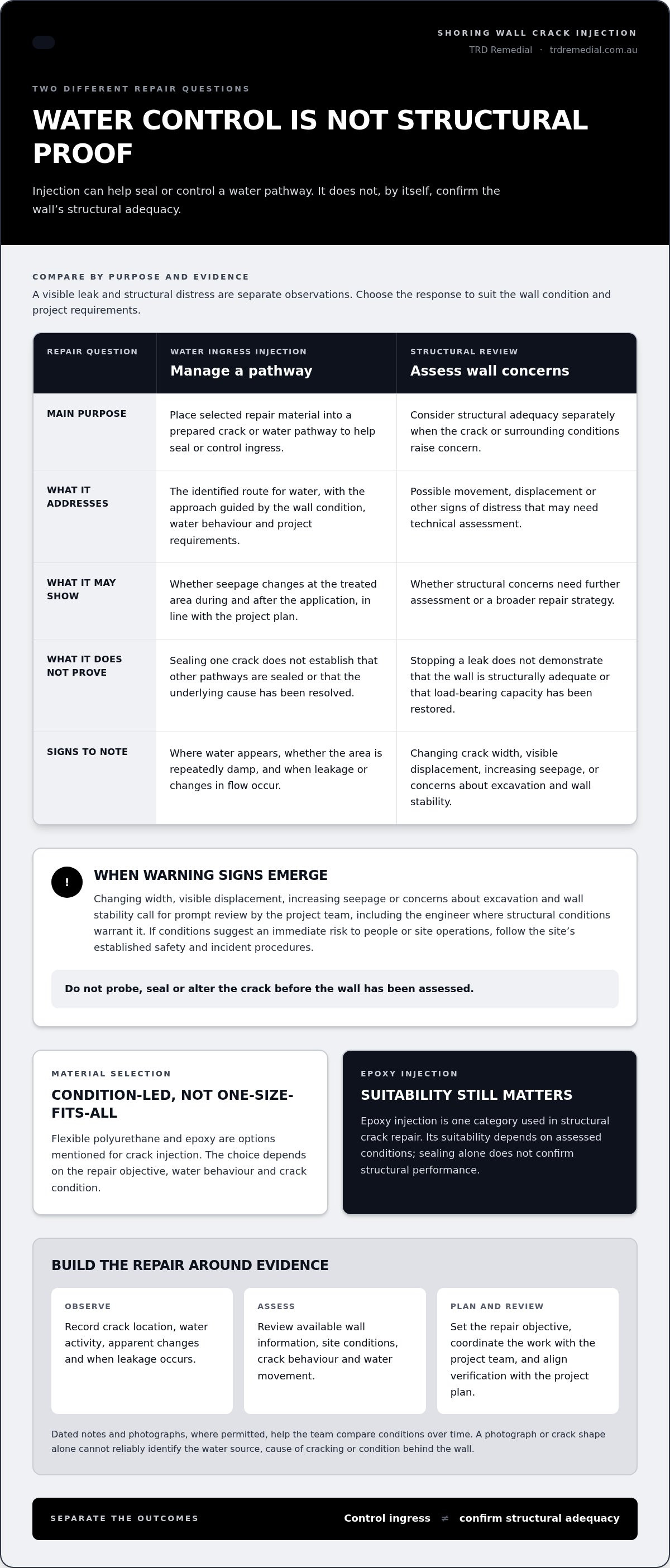
A crack can create a pathway for water to pass through the wall. Visible leakage and structural distress are separate observations: water emerging from a crack does not establish that the wall is moving, and stopping the leak does not demonstrate that the wall is structurally adequate. Shoring wall crack injection may seal or control a pathway, but it cannot replace assessment where structural concerns exist.
How can water reach a crack in a shoring wall?
Groundwater can exert pressure against a below-ground wall and move through openings that connect the retained ground to the excavation or interior space. These pathways may include cracks, joints and construction interfaces. Drainage arrangements and changing water conditions can affect where and when seepage appears. Intermittent leakage is still worth documenting, as the timing and pattern can help inform assessment.
Injection generally involves placing a selected material into a prepared crack or water pathway. This is related to pressure grouting, a process that introduces fluid material into cracks or voids under pressure. The repair approach depends on site assessment. A photograph or crack shape alone cannot reliably identify the water source, the cause of cracking or the condition behind the wall.
Which crack signs need prompt technical assessment?
Record observable details without disturbing the wall. Note the crack’s location, whether water is actively seeping or the area is repeatedly damp, and any apparent change in width or alignment. Record when leakage occurs and whether its flow changes. Dated notes and photographs, where permitted, help the project team compare conditions over time instead of relying on a single observation.
Monitoring may help document a stable, unchanged condition, but it is not a substitute for technical review when warning signs emerge. Changing width, visible displacement, increasing seepage or concerns about excavation and wall stability call for prompt review by the project team, including the engineer where structural conditions warrant it. If conditions suggest an immediate risk to people or site operations, follow the site’s established safety and incident procedures. Do not probe, seal or alter the crack before the wall has been assessed.
How does shoring wall crack injection control water ingress?
Injection places a selected repair material into a prepared crack or water pathway. The aim is to seal or control ingress at the identified route, guided by the wall condition, water behaviour and project requirements. It is a targeted remediation method, not a universal fix for every crack or leak.
Leakage control and structural strengthening are separate engineering outcomes. A material chosen to limit water flow does not automatically restore the wall’s load-bearing capacity. Before work begins, define the objective: is the priority to manage seepage, address a crack with structural implications, or coordinate measures for both?
What happens during a typical injection operation?
The work begins with assessing the crack and surrounding conditions, then preparing the surface and arranging suitable access. Depending on the wall construction and the site, access may involve injection ports or another method suited to the repair. The selected material is placed in a controlled way, with the application and its response observed.
Preparation and execution are tailored to the wall, the pathway being treated and conditions on site. Observing the application helps the repair team understand how the material enters the pathway and whether water behaviour changes. The process and any verification should align with the project plan, rather than rely on a fixed sequence for every wall.
What can injection achieve, and what does it not prove?
A properly planned injection may seal a water pathway or reduce ingress through the treated area. The result depends on the condition being addressed and the specified performance. For example, controlling seepage at one crack does not establish that other pathways are sealed or that the underlying cause has been resolved.
Structural adequacy requires separate consideration. If a crack is moving, displaced or associated with other signs of distress, sealing alone may not address the issue. Continued movement may call for further assessment and a broader repair strategy. Epoxy injection is one category used in structural crack repair, but its suitability depends on assessed conditions. The American Concrete Institute provides further context on epoxy injection repair procedures.
For broader context on assessing and addressing cracks in concrete, read this concrete crack repair guide. TRD Remedial coordinates shoring wall crack injection and water ingress remediation around project conditions, working with builders and engineers to plan the repair. Explore TRD Remedial’s remediation services.
How should injection methods be compared for a shoring wall crack?
Compare methods against the repair objective, observed water behaviour and crack condition. Then assess whether the proposed material suits the project requirements. Flexible polyurethane and epoxy are broad material categories, not automatic choices based on a crack’s appearance. Suitability depends on verified product information and the conditions of the wall.
| Repair objective | Observed water behaviour | Crack condition | Assessment needs |
|---|---|---|---|
| Control water ingress | Active seepage or recurring dampness | Crack or pathway may be wet; movement status may be unclear | Understand the water path, wall construction and material suitability for the conditions |
| Bond across a crack | Water behaviour and moisture conditions require assessment | Crack condition and movement status need to be understood | Confirm whether bonding aligns with the specified repair objective and project requirements |
| Address structural concerns | Leakage may be present, absent or secondary to the concern | Displacement, changing width or other signs of distress warrant attention | Coordinate assessment with the project engineer and define any structural repair requirements |
When might flexible or rigid injection materials be considered?
Flexible materials, including polyurethane categories, may be considered when the objective is water sealing and some movement tolerance matters. Rigid materials, including epoxy categories, may be considered when the specified objective requires bonding across a crack. Neither category should be selected from a photograph or crack shape alone. Assessment needs to account for actual water behaviour, crack condition and intended performance.
Keep the purposes distinct: sealing controls a water pathway; bonding joins surfaces; structural repair addresses a defined structural requirement. One outcome does not automatically deliver the others. The repair plan should state what the injection is intended to achieve and how that outcome will be assessed.
Which site conditions affect the method choice?
Selection also depends on whether the crack is continuous, how the repair area can be accessed, the pattern and persistence of water flow, wall construction and the stage of excavation. Nearby joints or construction interfaces may connect to the observed pathway, so treating only the visible crack may not address the full route. These conditions influence material selection and the practical repair plan.
For shoring wall crack injection, start the comparison with evidence from the site and the project’s performance requirements. The concrete crack repair guide provides wider context on crack-remediation considerations. Injection remains a targeted approach, selected and coordinated around the assessed wall and site conditions.
What steps help plan shoring wall crack injection safely?
A controlled repair starts before injection. The plan should connect site observations with available wall information, project requirements and the conditions under which the work will take place. Where cracking raises structural concerns or excavation conditions could affect the work, coordinate the approach with the project engineer and site team.
- Document symptoms. Record the crack location, visible changes in width, leakage pattern and dates when conditions change. Note active seepage, recurring dampness or displacement without probing or altering the wall.
- Review available information. Gather relevant drawings, construction records and details of previous repairs. These can help clarify wall construction, known interfaces and the history of the area.
- Assess site conditions. Consider water behaviour, crack continuity, access, nearby services and the excavation stage. Do not undertake intrusive checks without the required project approval.
- Plan the works. Define the repair objective, proposed method, access, work-area controls and interfaces with other site activities. Include protection for surrounding finishes or services where relevant.
- Execute and verify. Carry out the planned repair and record the materials and completed work in line with project documentation requirements. Assess the outcome against the specified acceptance criteria.
What information supports an effective assessment?
Clear records help distinguish a one-off observation from a changing condition. Photograph the location where permitted, note when water appears and describe visible changes since earlier observations. Include nearby joints or interfaces that may relate to the water path. Provide available drawings, construction records and previous repair information for review. Also identify access constraints and nearby services, without undertaking unauthorised intrusive checks.
How are repair works coordinated and reviewed?
Before application, align the proposed method and access arrangements with site conditions and other work. This may involve coordinating with the project engineer and site team when structural concerns, excavation activity or sequencing make their input relevant. Work-area controls and protection measures should reflect the project, rather than assume identical conditions at every site.
Keep records of materials used and work completed in accordance with project documentation requirements. Post-repair observation or testing depends on the acceptance criteria specified for the work. There is no single verification step that suits every repair. A clear record gives the team a basis for reviewing both the intervention and its intended outcome.
For a coordinated, project-specific approach to shoring wall crack injection, discuss shoring wall remediation with TRD Remedial.
How does TRD Remedial deliver shoring wall crack injection?
TRD Remedial provides specialist shoring wall crack injection and water ingress remediation for residential, commercial and industrial projects. The approach is shaped by the wall condition, the observed water pathway and the repair objective, rather than applying one material or method to every site. The scope for controlling leakage may differ from the work needed to address a structural concern.
What project teams can expect from a specialist remedial approach
Planning connects site observations with the outcome the project needs. TRD Remedial works with builders, engineers and asset representatives so the proposed remediation can be considered alongside wall information, access, site conditions and other project interfaces. Where structural performance or excavation conditions are relevant, coordination with the project engineer and site team helps inform the work scope.
Delivery is tailored to assessed conditions and project requirements. The work may focus on controlling water ingress, while structural concerns may need separate assessment and a distinct repair scope. Sealing a leak should not be treated as proof that structural issues have been resolved. Clear objectives help everyone understand what injection is intended to address and what needs separate consideration.
When should a project team take the next step?
A project-level discussion is appropriate when leakage persists, changes over time or affects planned construction or use of a below-ground space. It is also relevant when the crack’s movement status is uncertain or observations raise concerns about the wall. Early coordination helps the team establish what information is needed to frame a considered remediation scope.
Before discussing the work, gather concise, practical details where available:
- the crack’s location and any visible changes;
- when seepage or dampness occurs and how it varies;
- available drawings, construction records or previous repair details; and
- relevant access constraints, nearby services and project activities.
These details support a focused discussion, but they do not replace site assessment where the wall or excavation conditions warrant further review. TRD Remedial works with builders, engineers and strata managers to coordinate remediation around project conditions and repair objectives, without assuming a standard outcome for every shoring wall.
To discuss a project-specific scope, discuss a shoring wall remediation project with TRD Remedial.
Turn observations into a considered repair plan
Effective remediation starts with understanding what the crack and water behaviour reveal, then matching the repair approach to the wall and project requirements. Shoring wall crack injection can target a water pathway, but sealing leakage does not demonstrate structural adequacy. Movement or other structural concerns need separate consideration.
Documenting seepage, crack changes and relevant project information gives the team a clearer basis for planning. Where conditions warrant it, coordinating with the project engineer and site team helps align the repair objective, access and delivery.
TRD Remedial provides shoring wall crack injection and water ingress crack repairs, working with builders, engineers and strata managers on remedial projects. The approach is tailored to observed conditions, not based on a universal material or promised outcome. For project-specific support, discuss a shoring wall remediation project.
A clear plan is a practical first step towards managing water ingress and addressing the wall’s needs with care.
Frequently Asked Questions
Is shoring wall crack injection a structural repair?
Not necessarily. Injection may seal or control a water pathway, but that does not automatically demonstrate that structural capacity has been restored. Define the repair purpose against the wall condition and project requirements. If movement, displacement or structural performance is a concern, distinguish leakage remediation from any strengthening or other structural work that may be required. Treating a leak and addressing structural adequacy are separate outcomes.
Can shoring wall crack injection stop active water ingress?
Injection can address water pathways through cracks, but the outcome depends on the water source and behaviour, crack condition, wall construction and selected method. Water may also enter through nearby joints or construction interfaces rather than the visible crack alone. A project-specific assessment helps determine whether injection is appropriate and whether connected pathways should be considered. The repair scope should reflect observed site conditions, not assume one treatment will resolve every leak.
How is the right injection material selected for a shoring wall?
Material selection follows the repair objective and site conditions, including crack condition, water behaviour, access and movement concerns. Flexible and rigid resin categories have different properties, so neither is a universal solution. The selected material and application details should match project requirements and be supported by verified technical information. A crack’s appearance alone is not enough to determine suitability; the assessment needs to consider what the repair is intended to achieve.
What causes cracks in a shoring wall?
Cracks can have different causes, and their appearance alone cannot confirm why they formed. Construction details, ground and water conditions, movement, interfaces and the wall’s service history may all inform an assessment. Record the crack’s location, whether it appears to be changing and how water behaves. Reviewing these observations alongside available project information gives the team a better basis for understanding the condition without drawing conclusions from a photograph or isolated symptom.
Does a leaking shoring wall crack mean the wall is unsafe?
No. A leak by itself does not establish whether a shoring wall is structurally adequate or unsafe. Its significance depends on the wall condition, crack behaviour, excavation context and other project information. Changing cracks, visible displacement or other signs of distress warrant appropriate project-team assessment. Do not judge structural performance from water ingress alone. If there is an immediate site safety concern, follow the project’s established escalation and safety procedures without disturbing the wall.
How is shoring wall crack injection planned and completed?
A considered process starts by recording symptoms and reviewing available project information, then assessing the wall and access conditions. The repair objective and work sequence are defined before the crack is prepared and injected using the selected approach. After the work, documentation or review can be completed against project requirements. Procedures depend on the wall, site conditions and repair scope, so the plan should suit the specific project.
When should a shoring wall crack be assessed?
Arrange project-level assessment if water ingress persists, the crack appears to change, displacement is visible or the condition affects planned work. Record the location, leakage pattern and any changes over time, and gather relevant project information where available. These observations help the team frame the issue. If conditions appear to affect immediate site safety, follow the project’s established escalation and safety procedures. Do not probe, seal or otherwise disturb the wall before assessment.


