

A visible crack is evidence, not a diagnosis. For owners and managers, cracking, concrete deterioration or signs of movement can raise immediate concerns about safety and further damage. The practical question is whether the issue needs specialist structural remediation and what a properly scoped repair involves. Capable structural repair contractors look beyond the surface defect, linking investigation, engineering input and repair work to address the cause and restore building performance.
The right repair starts with a clear understanding of the defect and the work required. A patch alone may not resolve the underlying issue, and unclear responsibilities between engineers, builders and contractors can complicate delivery. TRD Remedial works with builders, engineers and strata managers on technically demanding remediation, coordinating crack injection, concrete repairs, structural strengthening, scanning and concrete cutting as the project requires.
This guide explains which defects may need specialist repair, how diagnosis and engineering input shape the scope, and what to look for in a contractor coordinating remedial works across Australia. It shows how a well-defined scope connects technical assessment to precise execution, helping repair work protect the structure’s ongoing performance.
Key Takeaways
- Track how cracks and other visible defects change over time. Record their location and pattern to help inform an assessment.
- Match the repair method to the assessed defect, substrate, structural requirements and site conditions.
- Structural repair contractors address more than surface damage, coordinating diagnosis, remedial scope and specialist execution.
- Understand the typical steps, from gathering information and defining the scope to preparation, repair and close-out.
- TRD Remedial’s repair, strengthening, scanning and cutting capabilities can support complex defects, with methods selected to suit the project.
When should you call structural repair contractors? Signs that need assessment
Visible damage can be concerning, but a crack alone doesn’t prove a building has a structural problem. Fine cracking in a surface finish may be cosmetic. A defect that is widening, recurring or accompanied by movement deserves closer attention. Consider what has changed, where the damage appears and whether there are related signs elsewhere.
A structural defect is damage or movement that may affect a building element’s capacity to perform its intended structural function. Determining whether a particular defect meets that description requires assessment of the building and its conditions, not a remote diagnosis based on a photograph. Structural engineering provides the principles used to understand how structural elements carry and transfer loads.
Which visible signs can indicate a structural defect?
Look for change and context, not just the presence of a mark. Progressive cracking, concrete spalling, visible deformation or movement can warrant investigation, particularly if damage returns after patching or appears alongside other symptoms. Cracks near beams, columns or slabs deserve attention because these elements may form part of the building’s load-bearing system. Their location is a reason to assess, not proof of failure.
Record when the damage was first noticed, whether it has changed and where it occurs. Photographs taken from consistent positions can help document visible changes. Notes about sticking doors, uneven floors or changes in how a space is used add useful context. Images and symptoms can’t establish the cause: similar-looking cracks can have different causes, and the underlying issue may not be visible at the surface.
When is a specialist structural assessment important?
Timely assessment is valuable when damage is visibly progressing, recurring, affecting a building’s use or appearing across connected elements. A surface finish that needs routine attention is different from suspected movement around a beam, column or slab. The distinction matters: treating only what is visible may leave the underlying defect unresolved, while assuming every crack signals structural failure can lead to unnecessary work.
Some signs call for immediate attention to site safety. If there is sudden movement, falling concrete or an apparent loss of stability, keep people away from the affected area and activate the relevant building or site safety response. Other defects may allow planned investigation, with observations gathered and the repair scope developed before work begins. The appropriate response depends on what is happening on site, so don’t rely on a general description to determine the risk.
An engineer may provide assessment or design input where the project requires it. The contractor connects that technical input with site conditions and practical remediation. For structural repair contractors, recognising when symptoms need investigation is the first step towards defining work that addresses the defect rather than simply covering its visible signs.
How structural repair contractors match repair methods to defects
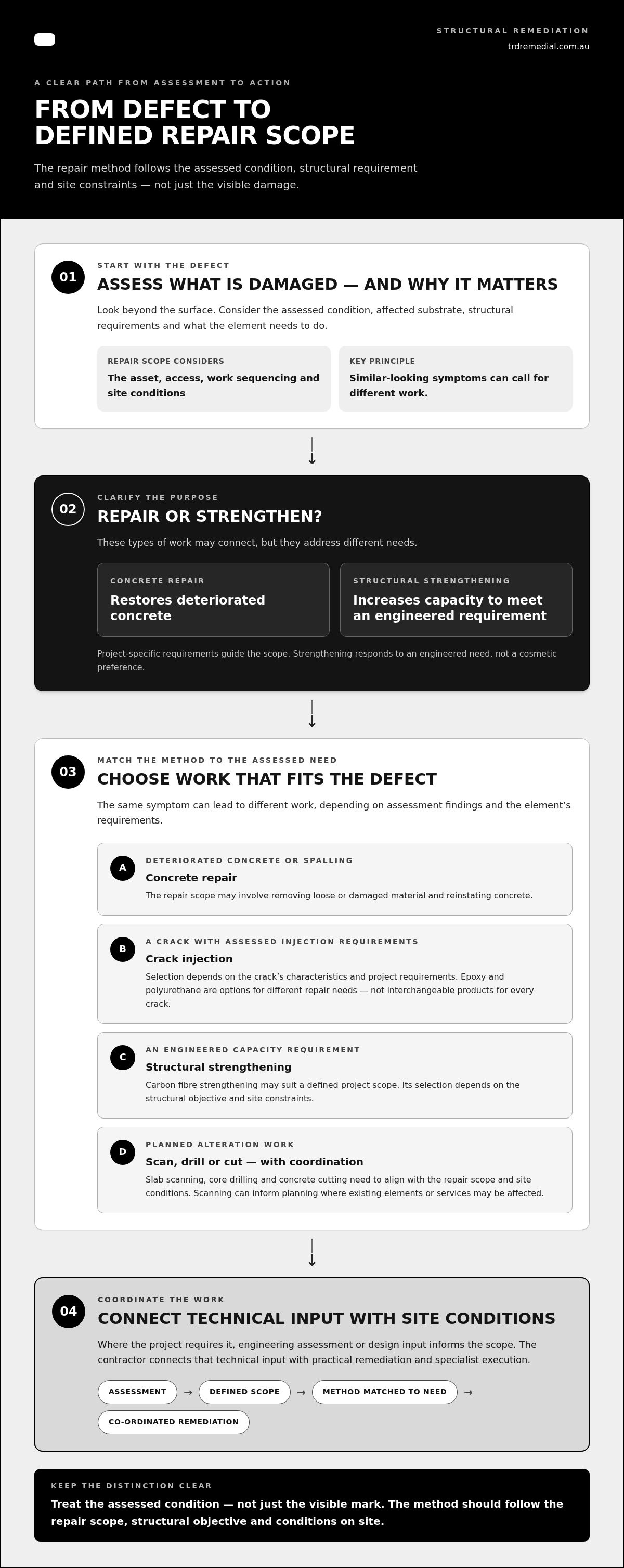
Choosing a repair method isn’t a matter of selecting the quickest way to cover visible damage. Structural repair contractors match the assessed defect, affected substrate and structural requirements to a defined repair scope. The scope also needs to account for the asset, access, work sequencing and site conditions. The same symptom can call for different work depending on what an assessment finds and what the affected element needs to do.
A useful distinction is simple: concrete repair restores deteriorated concrete, while structural strengthening increases an element’s capacity to meet an engineered requirement. The work may be connected, but its purpose differs. The Structural Engineering Institute (SEI) reflects the broader technical discipline informing decisions about structural performance. Project-specific requirements should guide the repair scope.
Concrete repair and crack injection
Concrete repairs address assessed deterioration, including spalling, by treating the affected concrete in line with the repair scope. The extent and condition of the defect matter: removing loose or damaged material and reinstating concrete is different from injecting a crack. Crack injection is selected according to the crack’s characteristics and project requirements. Epoxy and polyurethane are options for different repair needs, not interchangeable products for every crack.
For more detail on assessing concrete deterioration and planning repairs, see this concrete remediation guide. The method should follow the assessed condition, not a visual assumption.
Strengthening and alteration work
Structural strengthening responds to an engineered requirement, not a cosmetic preference. Carbon fibre strengthening is one specialist method that may suit a defined project scope. Selection depends on the structural objective and site constraints, so it isn’t a standard solution for every damaged element.
Planned alterations can involve slab scanning, core drilling or concrete cutting. These activities need to be coordinated with the repair scope and site conditions, particularly where drilling or cutting could affect existing elements or services. Scanning can inform planning, while controlled drilling and cutting help create specified openings or carry out alterations. The sequence and controls depend on project requirements.
For more detail on injection approaches and crack repair considerations, consult the specialist crack repair guide. Across residential, commercial and industrial assets, a clear scope connects assessment and engineering input with practical execution. It identifies what is being repaired or strengthened, how site constraints shape the work, and which methods suit the assessed defect.
TRD Remedial coordinates concrete repairs, crack injection, strengthening and supporting site works with builders, engineers and strata managers. Explore TRD Remedial’s structural repair capabilities to see how these services can support a technically scoped remediation project.
What distinguishes specialist structural repair contractors from general builders?
Not every defect calls for specialist remediation, but a structural issue shouldn’t automatically be treated as routine maintenance. Repainting a surface or patching a small area may address appearance. Recurring concrete damage or movement in a structural element can require investigation, a defined remedial scope and carefully coordinated work. The distinction is the purpose and technical demands of the job, not simply the size of the visible defect.
| General maintenance | Specialist structural remediation |
|---|---|
| Addresses routine wear or surface finishes. | Investigates defects in concrete and structural components. |
| Work is generally defined by a straightforward repair task. | Scope may rely on engineering assessment or design input. |
| Execution focuses on the maintenance activity. | Repair methods, access and sequencing are coordinated with site requirements. |
The work can overlap. Builders may be central to a project, while specialist structural repair contractors contribute defect-specific remediation and technical execution. The structural defect repair guide explains how defects connect to wider remedial requirements.
What expertise does complex remedial work require?
Complex work calls for a practical understanding of concrete condition, structural components and the repair method suited to the assessed defect. Where the project requires engineering assessment or design, that input informs the scope, and the contractor plans the site work around it. Concrete repairs, crack injection, strengthening and structural alterations can involve connected tasks. Their interfaces need to be considered together, not as unrelated jobs.
For example, an alteration involving an opening may require scanning and carefully planned cutting or core drilling alongside other specified work. These capabilities support the project scope, but they don’t replace assessment or make every method suitable for every asset. Engineering News-Record (ENR) provides a broader view of construction and engineering developments relevant to the environment in which remedial projects are delivered.
How does specialist coordination support occupied assets?
In occupied residential, commercial and industrial buildings, access and work sequencing affect how a repair can be carried out. TRD Remedial works with builders, engineers and strata managers to coordinate technical requirements with site conditions. Planning can address work areas, access arrangements, interfaces with other activities and communication with the people responsible for the asset.
That coordination doesn’t mean disruption can be ruled out. It means constraints are considered as the work is organised, so the repair scope and execution plan reflect how the building is used. Clear communication also helps align engineering input, contractor activities and site requirements as the project progresses.
TRD Remedial brings structural remediation, concrete repair and alteration capabilities together for technically demanding projects. Explore TRD Remedial’s structural repair services to understand how specialist work can fit within a coordinated project.
How structural repair works progress from assessment to handover
A repair project needs a clear path from observed defect to completed work. Structural repair contractors coordinate information, technical input and site preparation so the repair method reflects actual requirements, rather than assumptions made before work begins. The repair scope should follow assessment, not assumptions, because visible damage alone may not show what work the structure requires.
The stages below provide a practical framework. The sequence can change to suit the defect, engineering requirements, access and site conditions.
- Step 1: Gather site information. Review observations, available reports, photographs, access constraints and the intended project outcome. Note which areas are affected and any changes that have been recorded.
- Step 2: Assess and investigate. Establish what is known about the defect and whether further investigation or engineering input is needed. The findings help distinguish the repair task from its underlying requirements.
- Step 3: Define the scope. Set out the work areas, repair method, interfaces with other activities and any preparation required. Where assessment or design input is required, use it to inform the scope and planned execution.
- Step 4: Prepare the site. Coordinate access, work areas, sequencing and related trades before remedial work starts. For relevant drilling or cutting tasks, slab scanning can help inform the planned work and identify issues that need consideration.
- Step 5: Complete and close out. Carry out the specified repair, review the completed work against the scope and communicate relevant close-out information to the project team.
From site information to a defined repair scope
Good scoping brings several inputs together: observed defects, available reports, access, site use and the outcome the project needs to achieve. If the information points to an unresolved question, further investigation or engineering assessment may be needed before the method is settled. This helps align the work with the defect and the requirements of the affected element.
There is no single scope that suits every asset. A concrete repair in an accessible area differs from work involving restricted access, connected structural elements or planned alterations. The scope must reflect those conditions, including how the repair will be prepared and carried out.
Site preparation, execution and completion
Before work begins, the team can coordinate work zones, access arrangements and the sequence of related activities with the people responsible for the site. In an occupied building, planning also considers how the work area interacts with building use. Scanning should precede relevant slab drilling or cutting where appropriate, so the task can be planned with site information in view.
During close-out, the completed work and relevant observations can be communicated to the project team, including builders, engineers or strata managers. For coordinated assessment-to-repair delivery, discuss your structural remediation project with TRD Remedial.
TRD Remedial structural repair contractors for complex building defects
TRD Remedial delivers structural remediation and concrete repair contracting for residential, commercial and industrial projects across Australia. The work spans localised concrete deterioration, cracking, structural strengthening and alterations. Rather than applying the same remedy to every defect, the team’s capabilities support scopes shaped around the assessed condition, engineering requirements and site constraints.
That breadth matters when a project involves connected tasks. A repair may need concrete remediation and strengthening, while an alteration may also require scanning, drilling or cutting. Structural repair contractors coordinate these activities with the project team so the chosen methods serve the defined scope, not just the visible symptom.
Structural repair capabilities for varied project scopes
Different capabilities address different project needs. Concrete repair and crack injection can form part of remediation for assessed concrete defects, while structural strengthening addresses specified performance requirements. Carbon fibre strengthening is one option for suitable engineered scopes, not a universal treatment. Technical services can also support related alteration work.
- Concrete repairs and spalling repairs: address assessed concrete deterioration and damaged areas.
- Crack injection: remediate cracks using an approach suited to the defect and project requirements.
- Structural and carbon fibre strengthening: support engineered strengthening scopes where appropriate.
- Slab scanning, core drilling and concrete cutting: support planned openings and alterations, with controlled demolition available where the project scope calls for it.
These methods aren’t interchangeable. A defined scope establishes which capabilities are relevant and how they fit together on site.
Move from a building concern to a defined next step
A useful first project brief brings the available information together. Note where defects appear, when they were observed and whether they’ve changed. Add photographs showing the location and wider context, along with relevant inspection reports, engineering information or records of previous repairs. These details help frame the concern and support a focused discussion about site requirements.
TRD Remedial works with builders, engineers and strata managers, coordinating project requirements with the people involved in assessment and delivery. Sharing the intended outcome, access considerations and known constraints can help clarify how remediation, strengthening or technical alteration capabilities may fit the scope. The repair method remains specific to the defect and project, rather than being assumed from a photograph alone.
Bring the concern and available project information into a practical discussion with TRD Remedial. Discuss your structural repair project.
Set the repair project up for a confident next step
A building concern becomes easier to act on when the project team shares a clear picture of the issue and the outcome required. Before decisions are made, bring together the people responsible for the asset and technical work. A concise starting brief can turn uncertainty into a practical conversation about investigation, scope and delivery.
For owners, managers and project teams, the aim isn’t simply to find structural repair contractors. It’s to establish a repair pathway that responds to the building’s actual condition and can be coordinated with site needs. Start with useful information: where the defect is, what has changed, and which reports or repair records are available.
TRD Remedial can discuss project requirements with your team and help progress the conversation towards a defined structural repair scope. Discuss your structural repair project and take the next step with a clearer basis for action.
Frequently Asked Questions
What does a structural repair contractor do?
A structural repair contractor scopes remedial work and carries out specified repairs or strengthening, coordinating site activities with builders and engineering input where required. For example, a concrete defect may need more than surface patching if the repair scope identifies a wider issue. The contractor connects the assessed need with practical work suited to the structure and project conditions.
How do I know if a crack is structural?
You can’t confirm from appearance alone whether a crack is structural. Its position, direction, width, history and relationship to other changes can help guide an assessment, but these signs don’t establish the cause. Record when you first noticed it and whether it changes, and note nearby symptoms such as uneven surfaces or difficulty operating doors. If the crack is progressing or affecting how the building is used, arrange an appropriate assessment.
Do structural repairs need an engineer?
Some structural repairs require engineering assessment or design input. The requirements depend on the defect and proposed work. An engineer may assess the affected element, define performance requirements or provide repair details for the contractor to execute. A straightforward repair may have different technical needs. Establish what input the scope requires before work begins rather than assuming every repair follows the same process.
What is the difference between structural repair and concrete repair?
Concrete repair describes work to address deterioration in concrete, while structural repair refers more broadly to work intended to restore or improve a structure’s performance. Concrete repairs can form part of a structural repair project, but not every concrete defect requires strengthening. Repairing a local area of spalling and reinforcing an element to meet a specified structural requirement are different tasks. Assessment helps determine the purpose and extent of the work.
Can a structural repair contractor work on commercial buildings?
Yes. Structural repair contractors can undertake remedial work on commercial buildings, where the scope may need to account for building operations, access arrangements and coordination with site representatives. A car park, for example, can involve concrete defects alongside constraints on work areas and movement through the asset. The appropriate repair approach depends on the assessed condition and project requirements, not simply whether the building is residential or commercial.
How long do structural repairs take?
There’s no single timeframe for structural repairs. Duration depends on the defect, the amount of investigation and engineering input required, access, site conditions and how the work must be staged. A localised repair and a project involving multiple areas or structural alterations have different demands. A useful programme can be developed once the scope and practical constraints are understood, rather than estimated from a photograph or brief description alone.
Can structural repairs be completed while a building is occupied?
Sometimes, but it depends on the repair method, work area, access and how the building is used. Planning may involve separating work zones, coordinating activities and communicating access changes to relevant building representatives. Some tasks may require tighter controls or temporary restrictions in affected areas. Consider occupancy during scoping so the execution plan reflects site conditions. Don’t assume work can proceed without affecting building use.


