

Rust stains, cracks, bulging, flaking or separating concrete can signal spalling. A sound strata concrete cancer maintenance plan treats these signs as a prompt for assessment, since visible deterioration alone does not reveal its cause or extent. If concrete is loose or falling, restrict access to the affected area and seek professional advice before planning routine work.
For owners and strata managers, the challenge is to address damage while protecting residents’ safety and access. Covering the surface may conceal a symptom while corrosion or water ingress continues behind it.
This article explains what concrete cancer is, how to recognise possible spalling and how repairs can range from localised concrete work to structural remediation. It also covers planning work in an occupied building, including safe access, resident communication and identifying the underlying cause.
Key Takeaways
- Rust stains, cracking, bulging and flaking can indicate spalling, but visible damage alone doesn’t show its cause or extent.
- Effective repairs address the corrosion or moisture source as well as damaged concrete, rather than simply covering the surface.
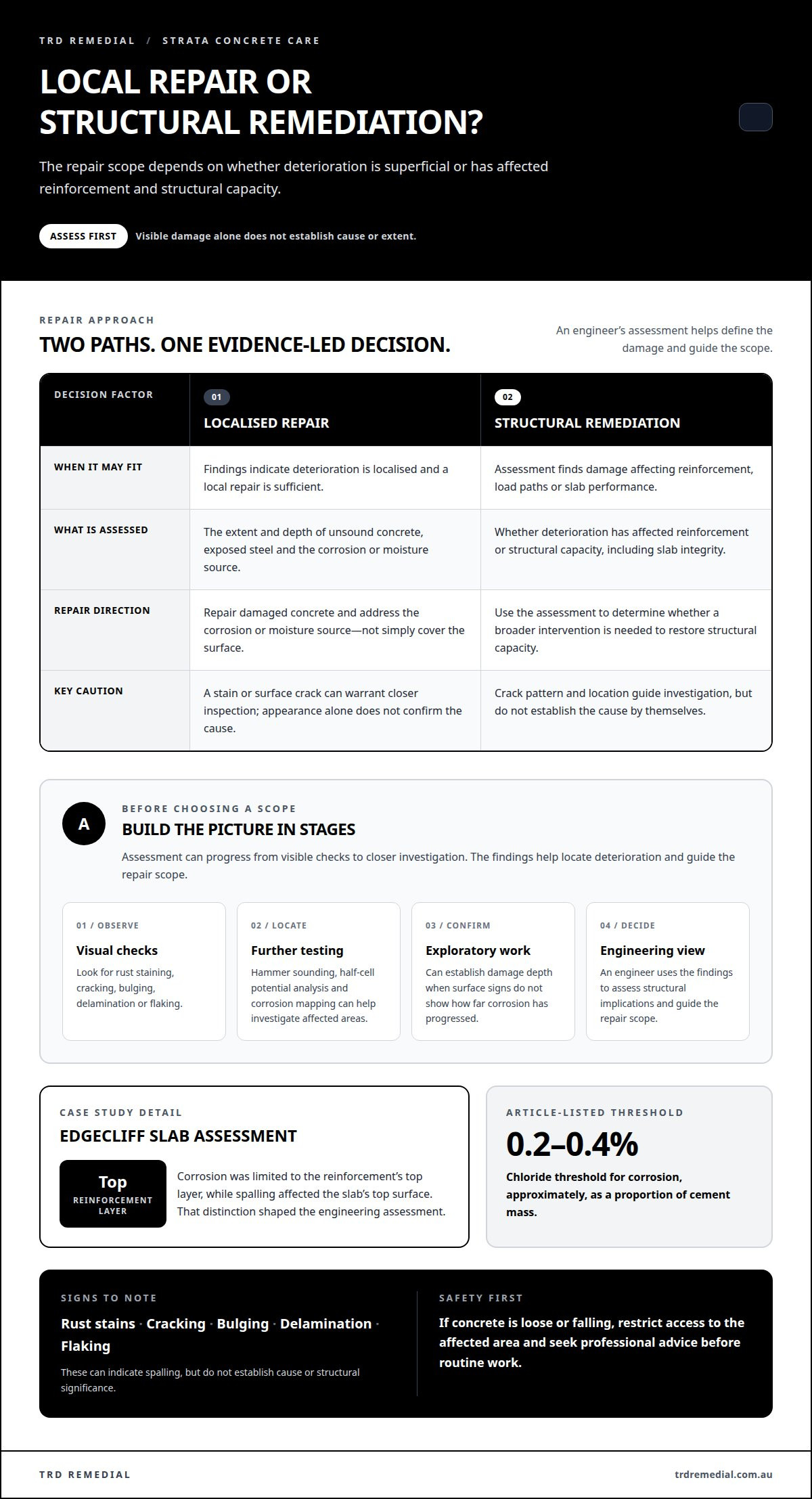
- The repair approach depends on whether deterioration is superficial or affects reinforcement and structural capacity.
- Plan occupied-building work around safe access, clear resident communication and staged repair areas.
What’s Remedial Building Repairs Including Strata ?
In strata buildings, remedial repairs address concrete deterioration and its cause. Early diagnosis helps committees understand the damage before deciding how to proceed.
Concrete Spalling and Its Development
Concrete spalling occurs when deteriorated concrete cracks, separates or breaks away from a building surface. In strata buildings, it can expose steel reinforcement and affect a balcony, ceiling, column or slab. Corrosion expands inside the concrete, putting pressure on the surrounding material, worsening cracks and potentially reducing reinforcement strength. Because damage can extend beyond the surface, committees need to assess its extent and implications for structural integrity.
Causes and Visible Signs
Moisture and chlorides can penetrate concrete, reach embedded steel reinforcement and trigger corrosion. Cracking, rust staining, bulging and delamination may indicate concrete cancer, but they do not establish the cause or full extent. A visual inspection can identify areas for closer assessment; diagnosis may also involve hammer sounding, corrosion mapping or exploratory work. After heavy rainfall, check exposed areas for new staining or deterioration.
Choosing a Repair Contractor
Compare quotes against the same repair areas, assumptions, access method, testing, exclusions, provisional quantities and completion requirements. This gives the strata committee a like-for-like basis for assessing proposed work, including how it addresses corrosion and the source of moisture. Ask how the scope follows from the diagnosis and structural requirements. There is no universal Australian cost per square metre: conventional spalling repairs are generally priced per litre, with costs affected by damage depth, exposed steel, access and reinstatement.
Repair Responsibility and Strata Laws
Responsibility depends on whether the damaged concrete is common property or part of an individual lot; the strata plan helps define that boundary. In NSW, section 106 of the Strata Schemes Management Act 2015 places a duty on the owners corporation to maintain and repair common property. Across Australia, applicable strata laws vary by state and territory, so identify the relevant legislation and scheme documents. To fund work, compare the repair scope with capital works funds, then consider whether a special levy is needed under the scheme’s applicable rules. Insurance coverage turns on policy wording, the cause and exclusions; owners corporations should disclose known concrete cancer issues to insurers.
What is Concrete Cancer?
Concrete cancer is corrosion of embedded reinforcement, which can crack and dislodge surrounding concrete. For strata concrete cancer maintenance, schedule routine inspections, re-inspect treated areas and arrange spot repairs as deterioration appears. Let exposure, previous damage and repair findings guide inspection timing.
Moisture, Chlorides and Corrosion
Moisture and chlorides can pass through concrete cover and reach steel reinforcement, starting corrosion. In coastal buildings, salt air and water can supply chlorides, while leaks and failed waterproofing allow moisture ingress. Corrosion pits steel and reduces its cross-section; rust deposits also expand, placing pressure on surrounding material. The listed chloride threshold for corrosion is approximately 0.2%-0.4% of cement mass. As corrosion advances, cracking and spalling can follow.
Early Signs of Spalling
Rust staining may appear before a crack, while bulging, delamination and flaking can indicate deterioration around embedded steel. These signs help identify affected areas, but their appearance alone does not establish the cause or structural significance. For example, a stain on a balcony soffit may warrant closer inspection rather than immediate surface patching. Loose or falling concrete calls for risk controls and professional advice before routine access.
Assessment can progress from visual checks to hammer sounding, half-cell potential analysis and corrosion mapping. Together, these methods help locate deterioration and identify actively corroding reinforcement. Exploratory work can establish damage depth when surface signs do not show how far corrosion has progressed. An engineer uses these findings to assess structural implications and guide the repair scope.
Repair protection must address the affected steel and concrete, not simply conceal the surface. Specified protective coatings can limit salt, moisture and carbon dioxide reaching repaired areas. Corrosion inhibitors may also be considered as part of a designed protection approach. The required materials depend on the assessment and exposure conditions. Corrosion assessment can help clarify the extent of deterioration.
Structural and non-structural remedial work
Remedial work ranges from local surface repairs to interventions that restore structural capacity. Assessment distinguishes cosmetic deterioration from damage affecting reinforcement, load paths or slab performance.
Cracking and Structural Movement
Concrete cracking can reflect structural movement, including settlement, sub-soil subsidence, foundation movement or design weaknesses. The crack’s pattern and location help guide investigation, but appearance alone cannot establish its cause. A repair scope should explain whether movement, moisture or corrosion caused earlier work to fail. If cracking returns after patching, reassessing the cause matters more than applying another surface filler.
Slab Analysis and Integrity Restoration
Structural analysis examines whether deterioration has affected a slab’s reinforcement or capacity. At the Edgecliff case-study building, corrosion was limited to the reinforcement’s top layer, while spalling affected the slab’s top surface. That distinction shaped the engineering assessment. Findings from exposed concrete and steel help determine whether a local repair is sufficient or a broader structural response is needed.
Concrete repair generally involves removing unsound material back to sound concrete, then exposing and assessing the reinforcement. Corroded steel is cleaned and treated or replaced; where it is severely compromised, additional bars may be required. Repair mortar reinstates the concrete. An engineer determines the remediation needed to restore structural integrity rather than assuming every damaged area needs the same treatment.
Inaction carries risks: untreated corrosion can weaken a building and progress towards structural failure. If loose concrete, falling material or instability is suspected, the owners corporation should arrange appropriate risk controls and professional advice before routine access or repair planning. Advanced work may require scaffolding or propping. The repair plan should also explain how it addresses the original cause, including movement, water ingress or corrosion, to reduce the risk of repeat failure.
Resident access, work staging and occupied-building safety
Repair planning in an occupied strata building must account for residents moving near affected surfaces. Before work begins, map the damaged area, access routes and any locations where concrete could loosen or fall. If instability is suspected, arrange appropriate risk controls and professional advice before routine access or repair planning.
Staging helps separate repair activity from everyday use. For example, work on a balcony soffit may affect the area below, while repairs inside a corridor can narrow a shared route. The owners corporation can coordinate the sequence with residents, explain which areas are affected and communicate access changes as work progresses.
A qualified assessment also informs the work zone. Scaffolding may be needed for elevated repairs, while advanced concrete work can require propping the surrounding structure. The method depends on the building’s location and condition, the extent of deterioration and the access needed to reach sound material. Commercial premises within a strata building may also need work sequenced around their operating areas.
- Define the work area: identify the repair surface, access points and nearby spaces affected by dust, noise or restricted movement.
- Set the sequence: coordinate access to balconies, corridors or parking areas with the repair stages.
- Keep residents informed: explain when routes or shared spaces change, and where access is restricted.
Moisture ingress needs attention alongside visible repairs. If water continues entering through a crack or failed waterproofing, reinstating the surface alone may leave the cause in place. Include the moisture source in the assessment and repair scope, then coordinate related work with the concrete repair stage. This helps the committee plan a coherent response instead of relying on isolated patches.
For an occupied building, connect access planning with the repair scope from the outset. Plan concrete repairs around the affected areas and resident access.
TRD Remedial: Carbon Fibre Strengthening
TRD Remedial helps strata committees address concrete deterioration and identified strengthening needs. Its services include Carbon Fibre Strengthening, Structural Strengthening, Crack Injection and Concrete Repairs. Carbon fibre strengthening may be suitable when an assessment identifies a need to strengthen a concrete element; it does not replace diagnosing and treating active corrosion or moisture ingress.
For localised cracking or damaged concrete, the right repair depends on the affected area, the cause and the structural assessment. A clear scope helps owners understand whether the work involves concrete repair, crack injection or strengthening, and how it fits the building’s remediation plan.
Discuss your strata building’s repair requirements with TRD Remedial, or visit trdremedial.com.au.
Set the next repair decision in motion
A durable strata concrete cancer maintenance plan starts with a clear record of the building’s condition and the committee’s priorities. Bring together inspection findings, photographs, previous repair records and practical access constraints. This gives the next discussion a defined starting point and keeps repair planning focused on the building’s needs.
Where an assessment identifies a need for further work, TRD Remedial offers Carbon Fibre Strengthening, Structural Strengthening and Crack Injection. The appropriate option depends on the diagnosed defect and repair scope, not simply the visible surface damage. A structured discussion can clarify how proposed work relates to the building’s condition and planned remediation.
Contact TRD Remedial to discuss repairs and take the next step towards a considered plan for your strata building. With the right information organised, your committee can move forward with greater clarity and purpose.
Frequently Asked Questions
How can you tell if your building has spalling?
Look for rust-coloured marks, cracks, raised or hollow-sounding patches, and concrete flakes on the ground. Check balcony edges, soffits, car park beams and facade panels, where exposed concrete can show deterioration. A new rust stain beneath a balcony may warrant closer inspection, even without a visible crack. These signs can indicate spalling, but assessment is needed to establish what is happening behind the surface.
That’s nice, but what is spalling?
Spalling is the loss of concrete when sections crack, detach or break away from an element. It can range from a small chip in a car park wall to damaged concrete around reinforcement on a balcony edge. The term describes the material breaking down, not its precise cause. That distinction matters: a surface defect and corrosion-related damage can look similar but need different investigation.
What causes spalling?
Spalling can result from corrosion of embedded steel, moisture ingress, chloride exposure, carbonation or chemical attack. Water entering through cracks or failed waterproofing can carry contaminants towards reinforcement. Poorly sealed concrete cutting or drilling can also create an entry point. Other deterioration, including efflorescence or damage to render and masonry, can resemble concrete spalling, so identifying the affected material helps guide diagnosis.
What should owners ask when concrete repairs have failed before?
Ask what the earlier repair included and what evidence explains its failure. The revised scope should address whether unsound concrete remained or movement, moisture ingress or corrosion continued. It should also explain how much concrete will be removed, how exposed steel will be treated and how reinstatement will be completed. Compare the new scope with previous records, photographs and the locations where damage returned.
What is concrete cancer in strata buildings in Australia?
Concrete cancer is corrosion of steel reinforcement embedded in concrete, which can cause cracking, separation and spalling. In a strata building, it may affect a shared balcony, car park slab, facade or column. Visible damage alone does not establish whether the problem is common property or its structural significance. The strata plan and a technical assessment help clarify the repair boundary and required response.
What causes concrete cancer in apartment balconies, car parks and facades?
Moisture and chlorides reaching embedded steel are common triggers. On a balcony, water may enter through cracking or failed waterproofing; in a car park, leaks can keep concrete damp. Facades may be exposed to salt-laden air and rain. Poorly sealed drilling or cutting can also provide an ingress path. The particular cause depends on exposure and construction details, so each location needs assessment.


